
Homemade Shrimp Stock

Make rich, flavorful shrimp stock at home with simple ingredients—perfect for soups, risottos, and seafood dishes. Easy, fresh, and versatile!
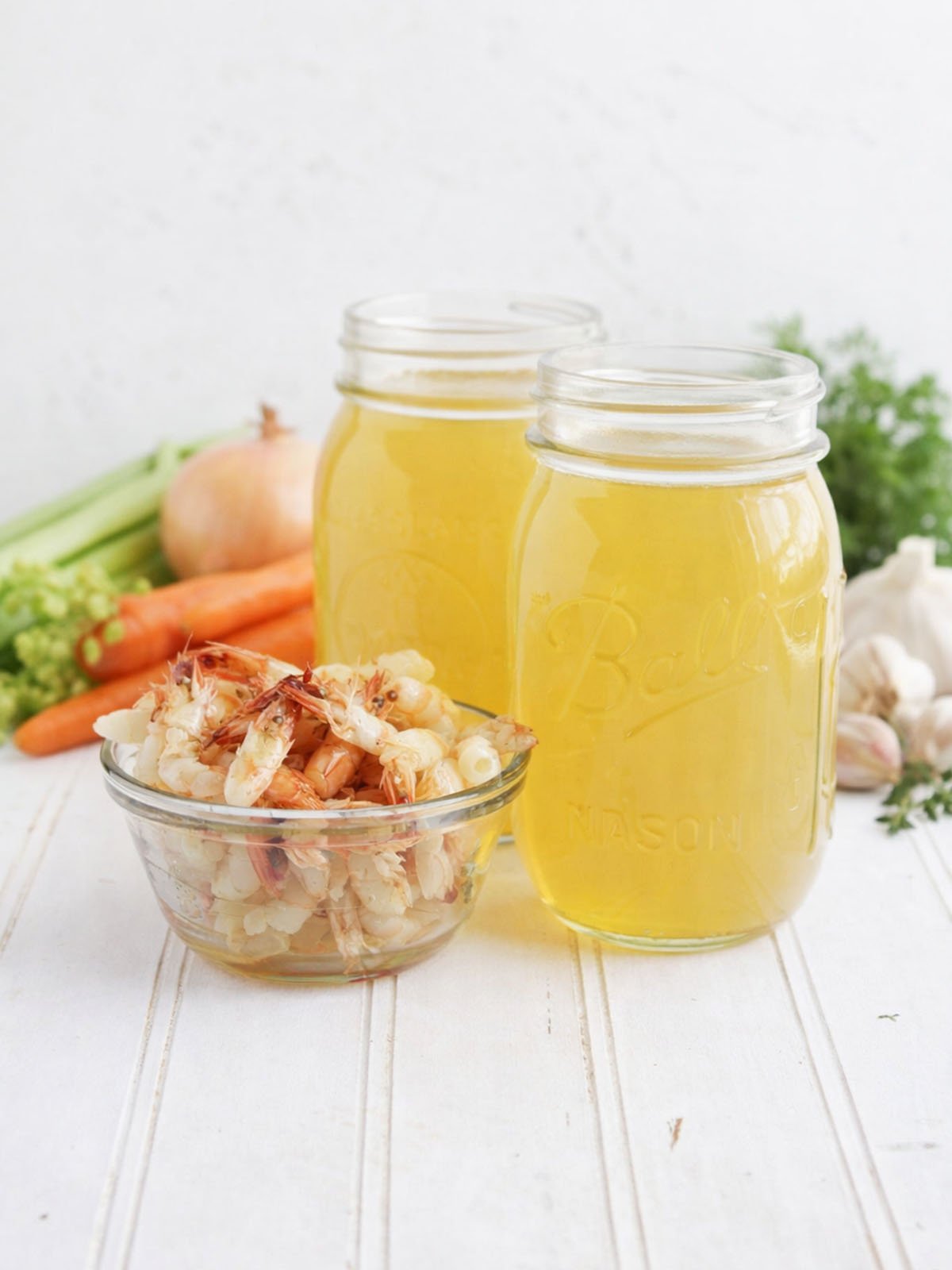
If you’ve ever cooked at home, chances are you’ve used chicken broth. It adds far more flavor than water and is easy to find—or make yourself.
Seafood stock, though, is less familiar. Chicken stock works in a pinch, but seafood dishes shine when you use shrimp or seafood stock instead. It enhances that natural, briny flavor instead of masking it with chicken.
While store-bought seafood stocks can be convenient, they often lack the fresh flavor of a homemade version. Making your own homemade shrimp stock allows you to control the seasoning, avoid additives, and maximize the taste of every dish. Plus, it’s a great way to use leftover shells from peeled and deveined shell-on shrimp that might otherwise go to waste.
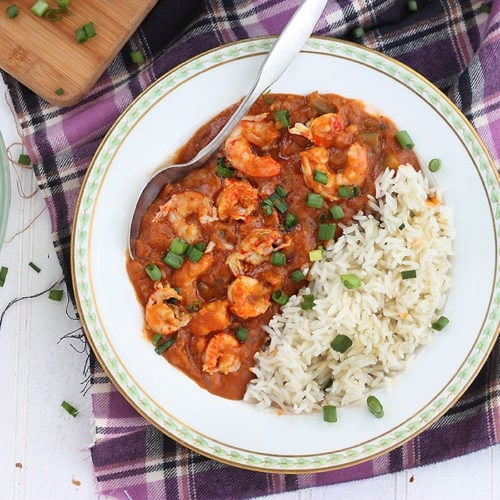
Looking for a few good shrimp recipes? I recommend shrimp nachos, cajun shrimp and rice, or 10-minute easy shrimp scampi.
“Great recipe! So much flavour in a short period of time.”
-dlabra
Recipe at a glance
- Uses shrimp shells you’d normally throw away
- Adds deep, restaurant-quality shrimp flavor
- Easy to make with simple ingredients
- Freezer-friendly for future meals
Summarize and save this content on
Jump to:
Ingredients you will need
With just a few simple ingredients and some shrimp shells, you can create a rich, savory base perfect for soups, risottos, paellas, and more. To make this easy shrimp stock recipe, you will need:
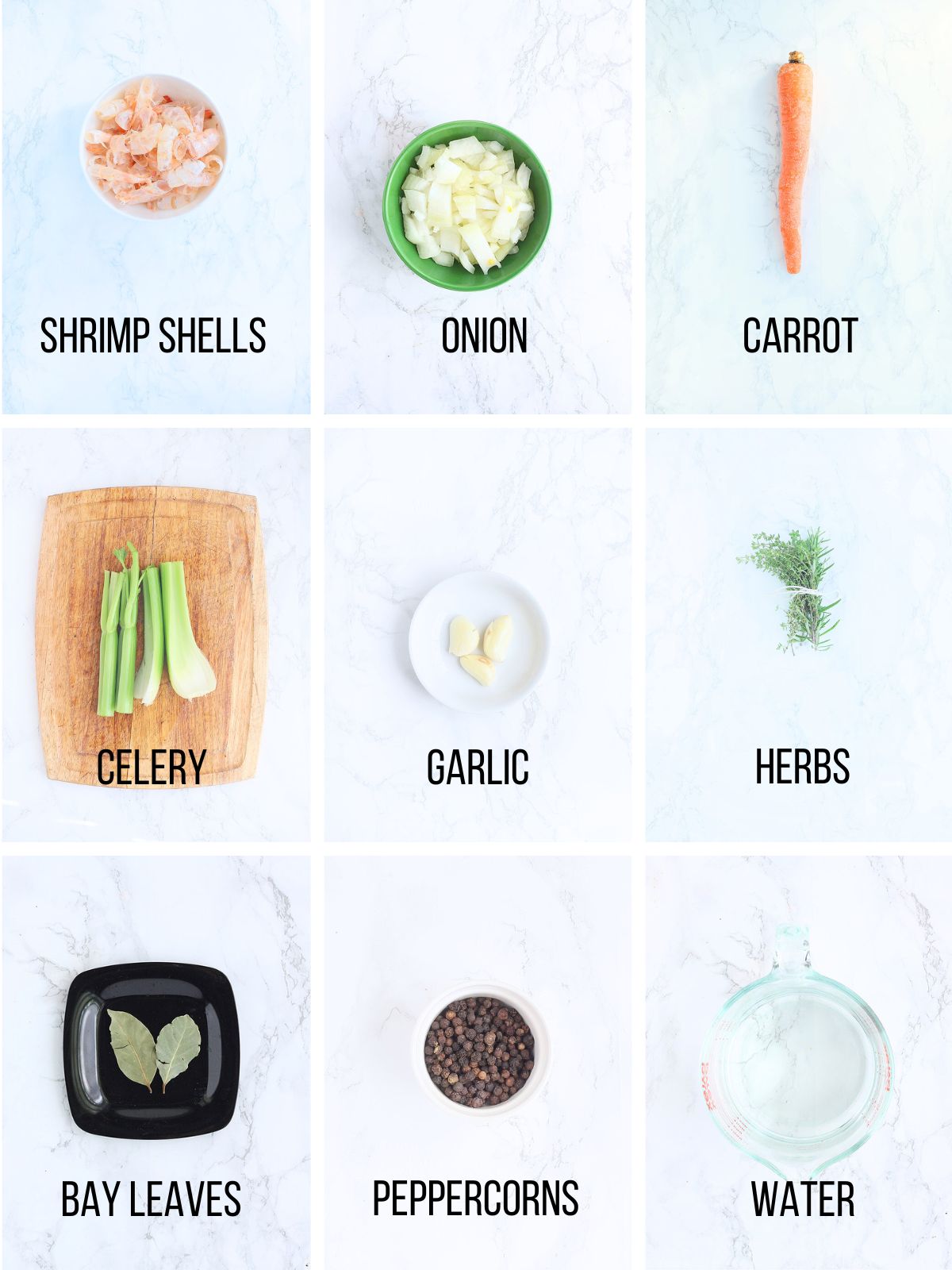
See the recipe card for full information on ingredients and quantities.
- Shrimp Shells – Packed with natural seafood flavor for creating a rich, savory base.
- Onion – Adds sweetness and aromatic depth to balance the shrimp.
- Carrot – Brings natural sweetness and body to the stock.
- Celery Stalk – Provides earthy freshness and complements the seafood flavor.
- Garlic – Infuses a gentle, savory undertone without overpowering.
- Fresh Herbs (Rosemary, Thyme, Sage) – Add aromatic complexity and depth to the stock.
- Bay Leaves – Enhance flavor with subtle herbal notes.
- Whole Peppercorns – Introduce mild heat and spice for a rounded taste.
- Cold Water – Extracts maximum flavor from the shells and vegetables.
Pro tip: Rinse shrimp shells under cold water to remove grit and residue. A quick rinse keeps the stock clean and flavorful—no soaking needed.
Substitutions and variations
- Shrimp shells: You can use shells from raw fresh shrimp or cooked shrimp. For deeper flavor, roast the shells at 400°F for 10–15 minutes before making the stock.
- Vegetables: Swap or add leek tops, fennel, or shallots for a slightly different flavor profile.
- Herbs: Thyme is the most classic choice, but parsley stems, bay leaves, or a small strip of lemon peel also work well.
- Garlic: Use fewer cloves or omit entirely for a cleaner, more delicate stock.
- Peppercorns: White peppercorns create a milder flavor, while black peppercorns add more bite.
- Flavor boosters: Add a splash of dry white wine or a few tomato scraps for extra depth—just don’t overdo it.
- Spicy variation: Toss in a pinch of red pepper flakes or a dried chile for subtle heat.
How to make shrimp stock
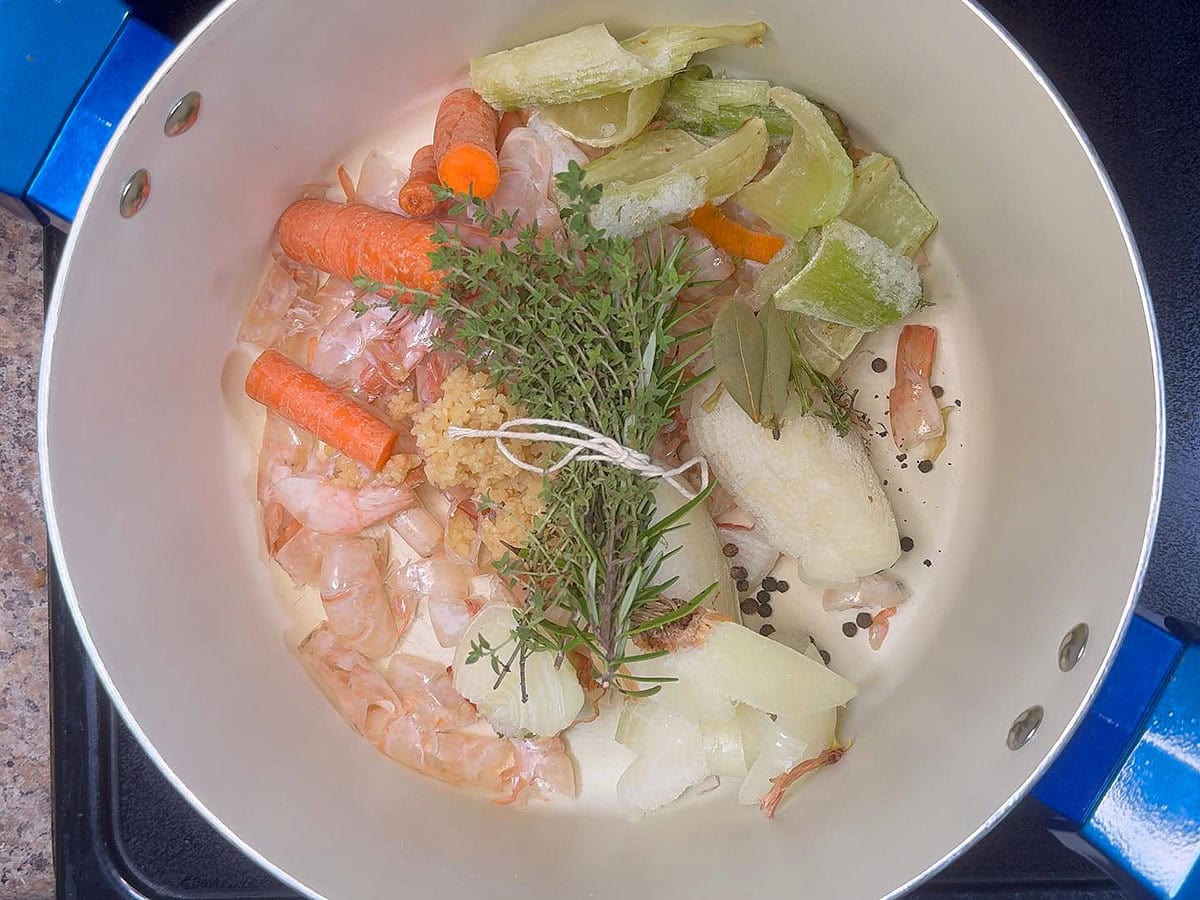
Step 1: Place the shrimp shells, onion, carrot, celery, garlic, herbs, bay leaves, and peppercorns in a large pot.
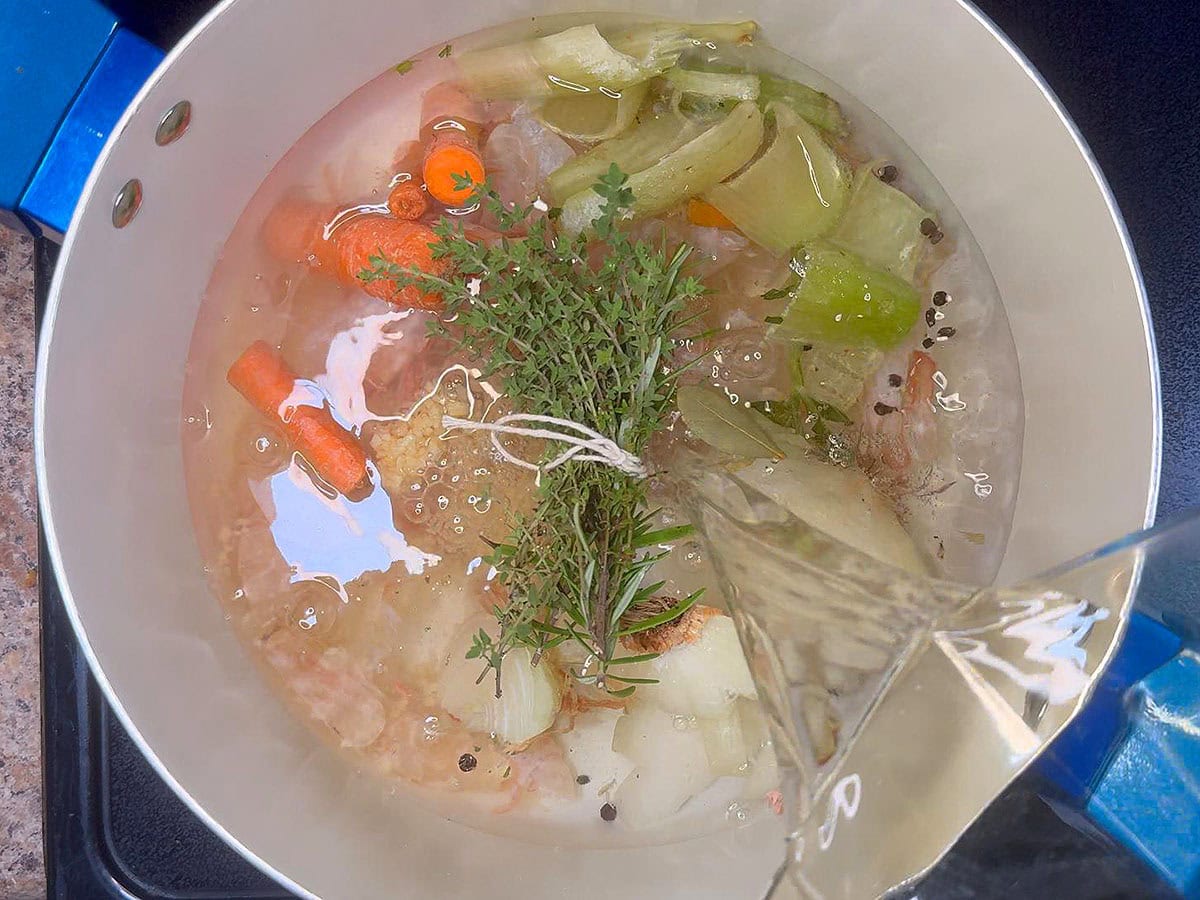
Step 2: Cover with cold water and bring to a gentle simmer over medium-high heat.
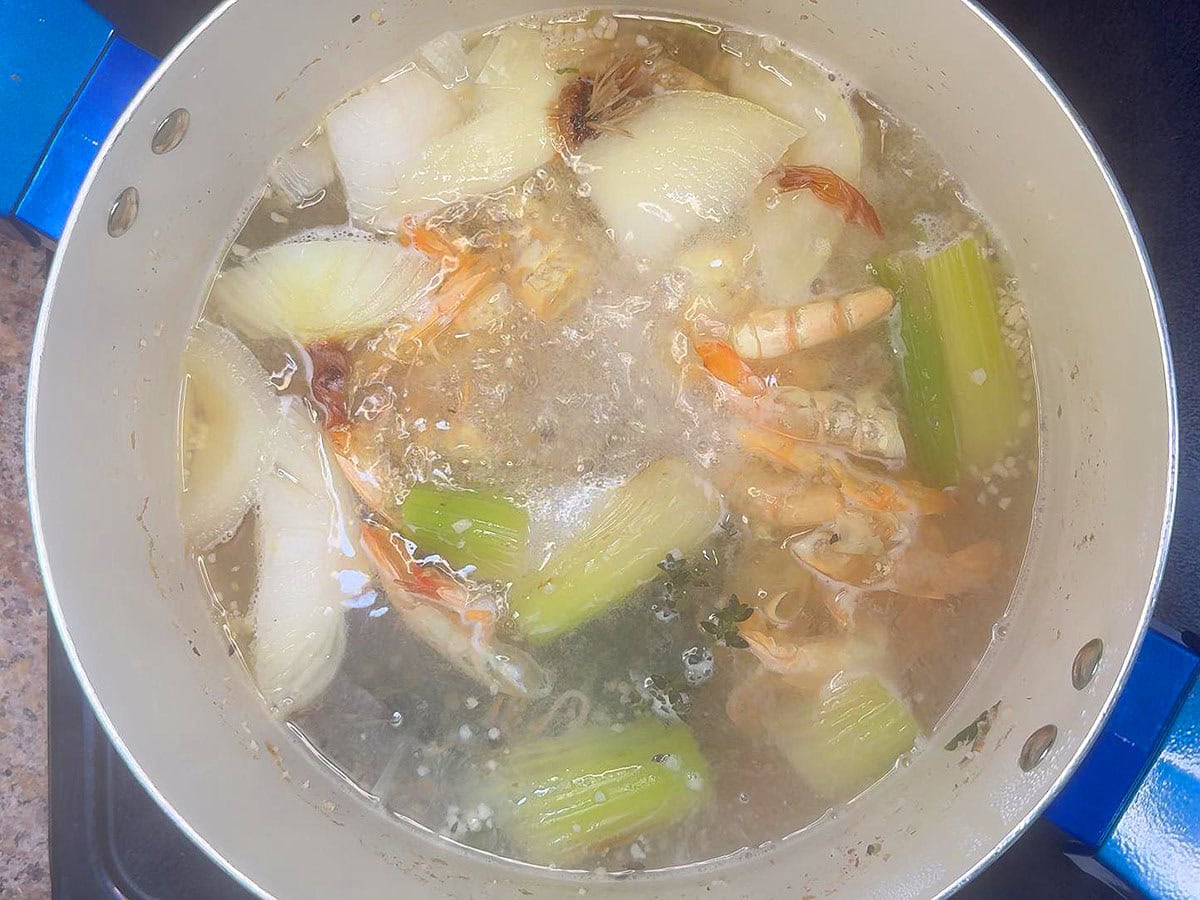
Step 3: Reduce the heat to medium heat, cover, and simmer for 45 minutes to 1 hour.
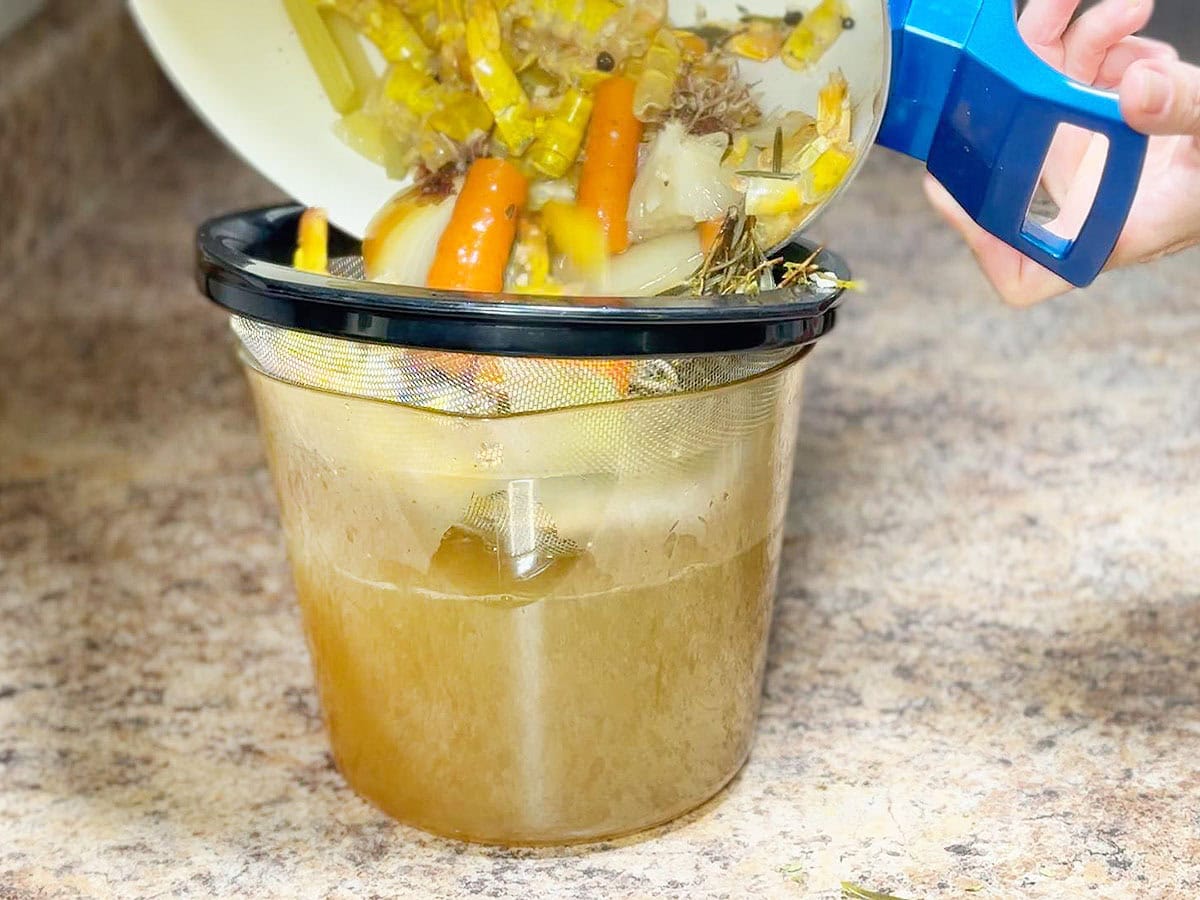
Step 4: Strain the stock through a fine mesh strainer to remove solids. Discard the solids. Use immediately, or store in the refrigerator for 3–4 days.
Tips for the perfect shrimp stock:
- Don’t overcook: Over-simmering can make the stock bitter. Keep an eye on the time.
Freeze in portions: Ice cube trays are perfect for freezing small amounts—perfect for when you just need a little flavor boost.
How to use shrimp stock
Shrimp stock is so versatile! Use it as a base for a variety of seafood dishes such as shrimp and corn bisque or seafood shrimp gumbo.
Storage, freezing, reheating, and canning instructions
Storage. Let the homemade stock cool completely, then store in an airtight container in the refrigerator for up to 3–4 days.
Freezing. Shrimp broth freezes well. Pour cooled stock into freezer-safe containers, freezer bags, or ice cube trays for smaller portions. Freeze for up to 3 months.
Pressure canning: For long-term storage, shrimp stock may be pressure canned. Shrimp stock must be pressure canned to prevent botulism, which can only be destroyed at temperatures higher than boiling water. A pressure canner reaches about 240°F, making it safe for low-acid foods like stock. Fill clean jars, leaving 1-inch of headspace and process at 10 pounds of pressure for 70 minutes for pints and 90 minutes for quarts. Discard any jars that fail to seal or show signs of spoilage.
Safety Disclaimer: Shrimp stock is a low-acid food and must be pressure canned using tested, approved guidelines. Processing times, pressure, and procedures may vary based on altitude, jar size, and canner type. Always follow your pressure canner manufacturer’s instructions and current USDA recommendations. Never water bath can shrimp stock, and discard any jars that do not seal properly or show signs of spoilage.
Reheating: Reheat gently on the stovetop over medium-low heat until warmed through. Avoid boiling, which can dull the flavor. Frozen stock can be thawed overnight in the refrigerator or reheated directly from frozen.
Shrimp stock FAQ’s
It will smell like seafood, but it shouldn’t be overpowering. If it has an overly fishy smell, the shells may not be fresh or the stock was simmered too long.
It’s best to leave shrimp stock unsalted so you can control seasoning in the final dish.
Cloudiness is normal and doesn’t affect flavor. For a clearer stock, avoid boiling and simmer gently.
Tried This Recipe? Let Me Know!
⭐️⭐️⭐️⭐️⭐️
If you made homemade shrimp stock, I’d love to hear how it turned out! Your ratings and reviews help others find the recipe and give me great feedback too.
More uses for shrimp stock

Homemade Shrimp Stock
Ingredients
- Shells from 2 pounds of shrimp
- 1 small onion peeled and quartered
- 1 large carrot cut into fourths
- 1 celery stalk cut into fourths
- 3 garlic cloves peeled and left whole
- Fresh herbs such as rosemary, thyme, or sage, tied together with kitchen twine
- 2 bay leaves
- ½ teaspoon whole black peppercorns
- 8 cups of cold water
Instructions
- Combine the shrimp shells, onion, carrot, celery, garlic, herbs, bay leaves, and peppercorns in a large pot.
- Cover the ingredients with water and bring to a gentle simmer.
- Reduce the heat to medium. Cover the pot and simmer for 45 minutes to one hour.
- Strain the stock through a fine mesh colander to remove the solids. Discard the solids.
Notes
- Rinse shrimp shells before using to remove any grit or residue.
- Simmer gently—boiling can make the stock bitter or cloudy.
- Do not add salt; season dishes later for better control.
- For deeper flavor, roast shrimp shells before simmering.
- Strain well using a fine mesh colander for a clean stock.
- Cool completely before storing, freezing, or canning.
Hi, Anna! Yes, you should rinse the shells first.
Do you rinse the shells before?