Muscadine Jelly
Turn fresh muscadine grapes into sweet, homemade muscadine jelly with this easy recipe. Includes water bath canning instructions and helpful tips.
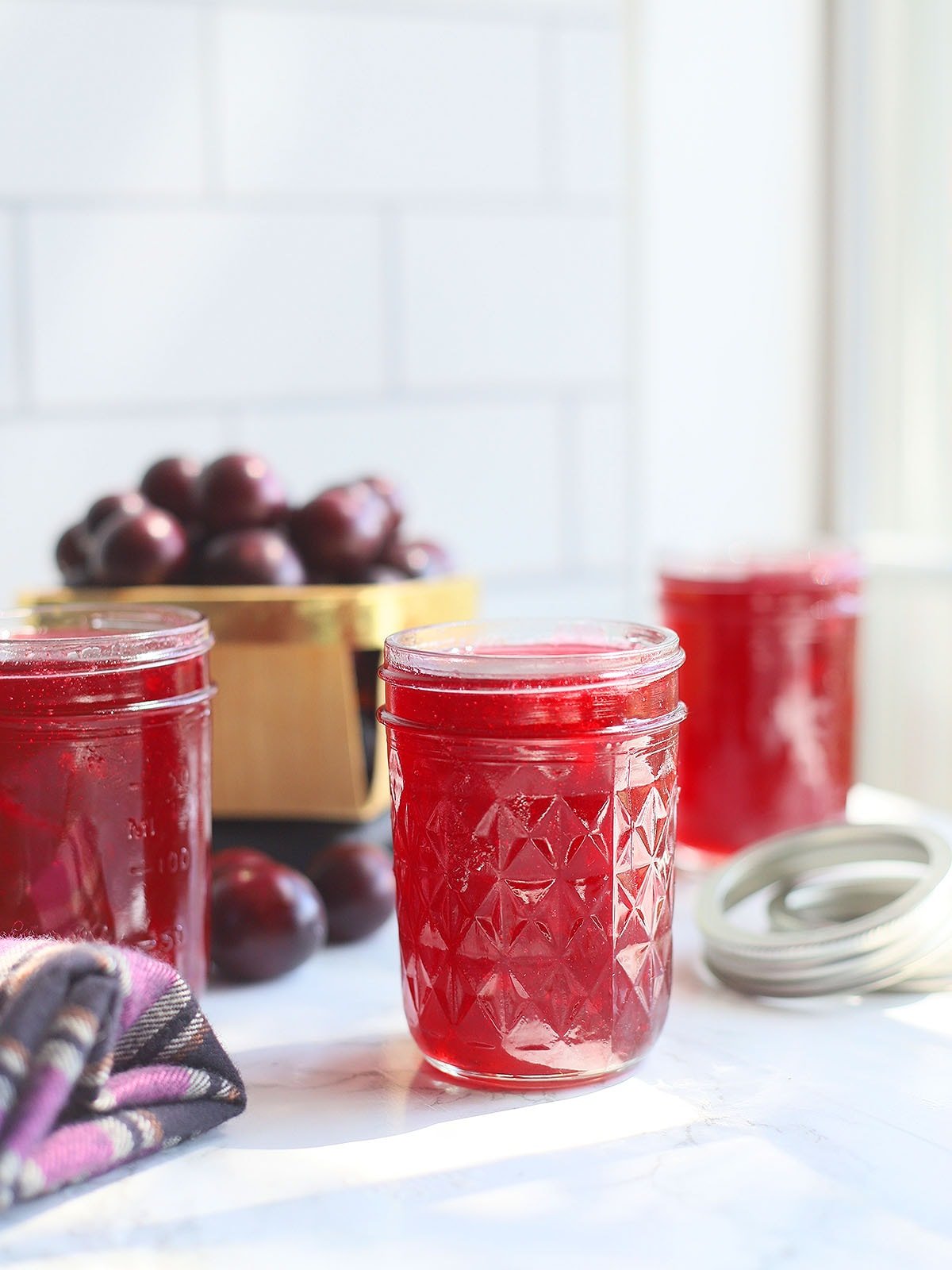
When you think about grapes grown in the United States, you probably think of California and the Pacific Northwest. However, here in the South, we have our own type of grapes —muscadines.
If you’ve never tasted muscadine jelly before, you’re in for a treat. Their thick skins and tough hull make them less enjoyable for snacking than grocery store grapes, but they produce an incredible muscadine juice that’s perfect for homemade jams and jelly recipes. Unlike traditional grape jelly, muscadines have a bold, almost floral flavor.
Recipe at a glance
- Made with fresh muscadine grapes.
- Perfect for preserving late summer harvests.
- Easy enough for first-time jelly making.
- Great for water bath canning.
- A wonderful homemade gift—just add a cute jar label and ribbon.
Summarize and save this content on
Jump to:
What are muscadines?
If you didn’t grow up in the South, you may have never seen muscadine grapes before. These native wild grapes thrive in the warm, humid climate of the Southern United States, stretching from North Carolina to Texas. Unlike the seedless grapes you’ll find year-round in grocery stores, muscadines have thick skins, a tough hull, and several large seeds. Inside is sweet, juicy pulp with a unique flavor that’s difficult to compare to any other fruit. Their bold taste makes them a favorite for muscadine wine, homemade jelly, and even desserts.
Fresh muscadine grapes have a relatively short season. You’ll usually find them from August through September, making them one of the last fruits of summer. You’ll often find them growing in wooded areas, climbing fences, or sold by the bucket at local farmers markets during late summer.
Ingredients you will need
One of the best things about this recipe is that the ingredient list is surprisingly simple. To make this muscadine jelly recipe, you will need:
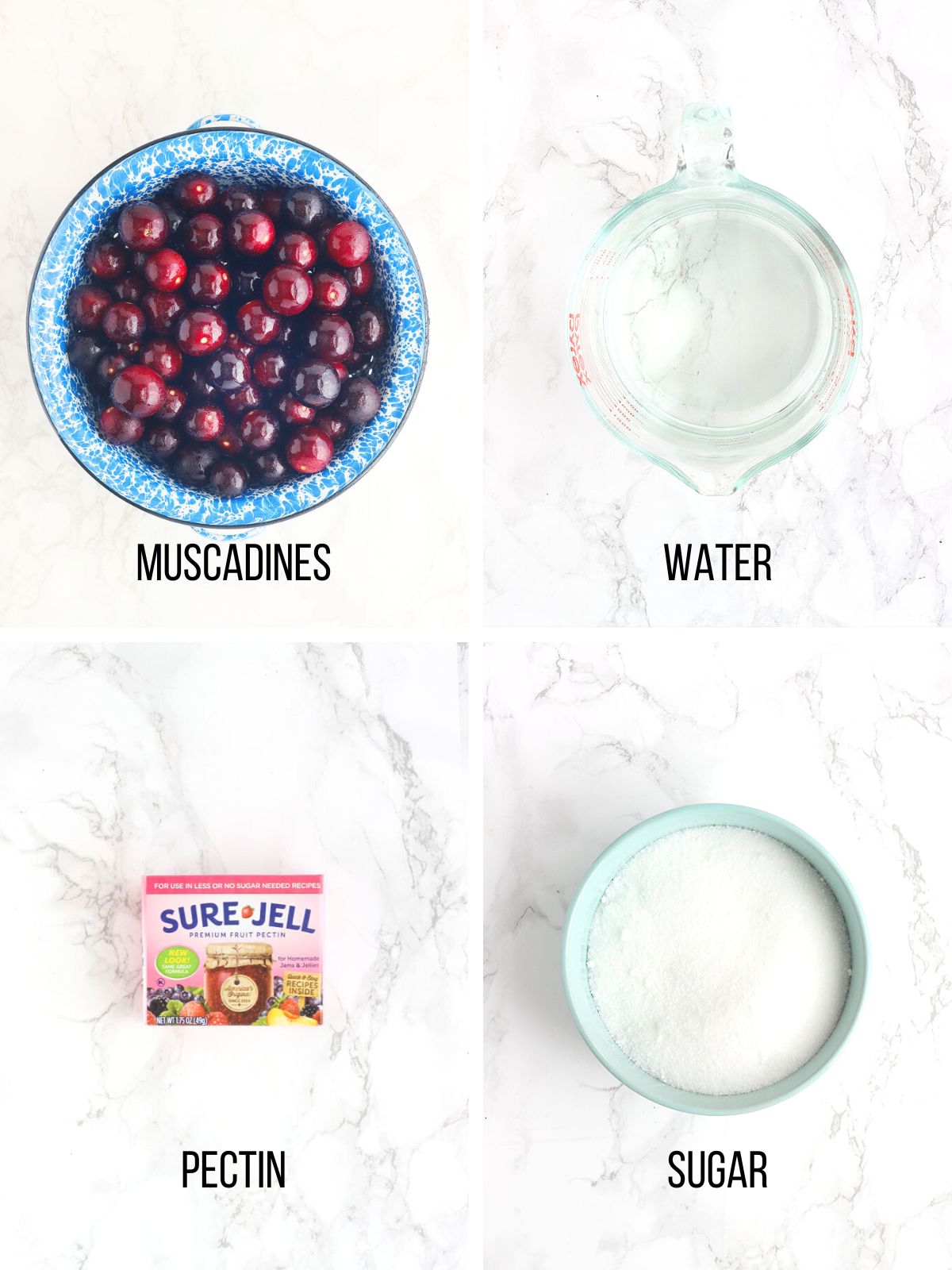
See the recipe card for full information on ingredients and quantities.
- Muscadine grapes – You’ll need about 5 pounds of muscadines. Look for plump, ripe fruit with smooth, unbroken skins. Both bronze scuppernong grapes and dark muscadine grapes work beautifully. You can even use a combination of the two for a more complex flavor.
- Water – You’ll need 8 cups of water, or enough to cover the grapes by about an inch of water in a large stockpot. The cups of water help soften the fruit so you can extract every bit of flavorful muscadine juice.
- Low-sugar fruit pectin – Because muscadines have thick skins and varying amounts of natural pectin, I recommend using commercial fruit pectin for consistent results. The pectin mix helps your homemade jelly set properly without hours of boiling.
- Granulated sugar – This recipe uses 6 cups of sugar. Besides adding sweetness, sugar works together with the pectin during the boiling process to create the perfect jelly texture. Once the mixture reaches a full rolling boil, you’ll add the sugar and cook just until the sugar dissolves.
You may notice some muscadine jelly recipes call for lemon juice or citric acid. Since this recipe uses commercial pectin, neither is necessary for a safe, flavorful batch of homemade jelly.
Substitutions and variations
One of the great things about this homemade muscadine jelly recipe is how adaptable it is. Here are a few ways to customize it:
- Use scuppernongs instead. Scuppernong grapes are simply a bronze variety of muscadine grapes. Swap them one-for-one to make scuppernong jelly, or use a mix of bronze and dark grapes for a slightly more complex flavor.
- Frozen muscadines work great. If fresh muscadines aren’t in season, frozen grapes are an excellent substitute. There’s no need to thaw them completely before cooking—just add a few extra minutes to the simmering time.
- Try liquid pectin. If you only have liquid fruit pectin, you can use it instead of powdered, but you’ll need to adjust both the amount and when it’s added. Follow the conversion and cooking directions on the package for the best results.
- Reduce the sugar. This recipe uses low-sugar fruit pectin, giving you more flexibility with the amount of sugar. Follow the manufacturer’s recommendations for minimum sugar amounts, as reducing it too much can affect how well the jelly sets.
- Sweeten with honey. Honey can replace granulated sugar when using low-sugar pectin. Keep in mind it will give the finished jelly a slightly different color and flavor.
- Use a sugar substitute. Low-sugar pectin also allows you to use sweeteners such as Splenda, stevia, or saccharin. Avoid aspartame, which can become bitter during the high-heat cooking process.
- Save the extra juice. If you end up with more than the required 10 cups of muscadine juice, refrigerate it for up to a week or freeze it for up to a year. Use it later to make another batch of jelly or enjoy it as a refreshing fruit drink.
- Make a small batch. Don’t need a full recipe? Simply halve the ingredients to make a smaller batch while following the same cooking and water bath canning instructions.
How to make muscadine jelly
Unlike jam or fruit preserves, jelly is made from juice only. The easiest way to extract muscadine juice is to cook them down until the thick skins start to soften.
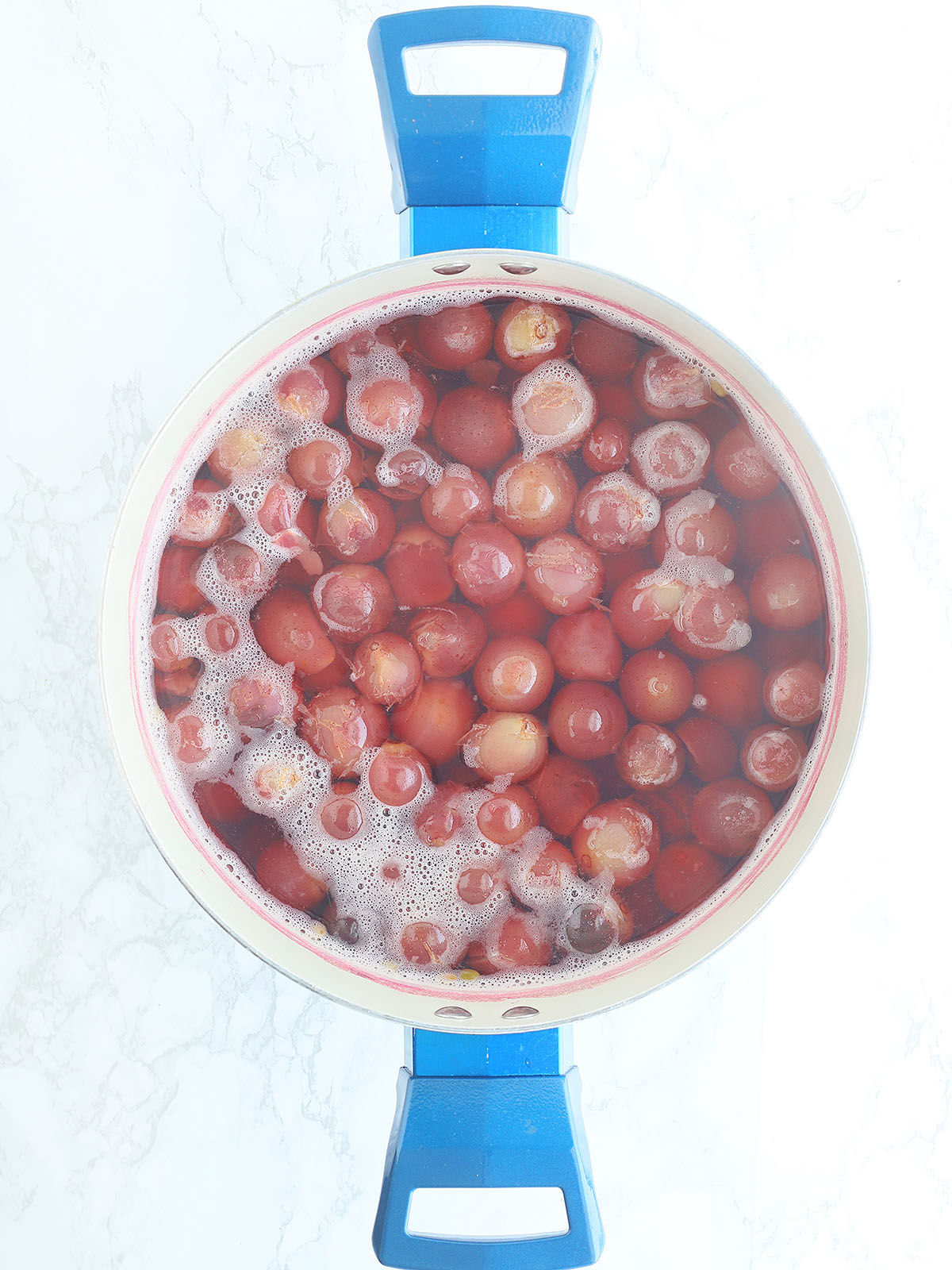
Step 1: Rinse the muscadine grapes under cool running water and transfer them to a large stockpot or large pot. Pour in 8 cups of water, or enough cups of water to cover the grapes by about an inch of water. Bring the water to a boil over high heat. Once boiling, reduce the heat to maintain a gentle simmer and cook for 20 to 25 minutes. As the heated grapes cook, their thick skins will split open and the fruit will become soft.
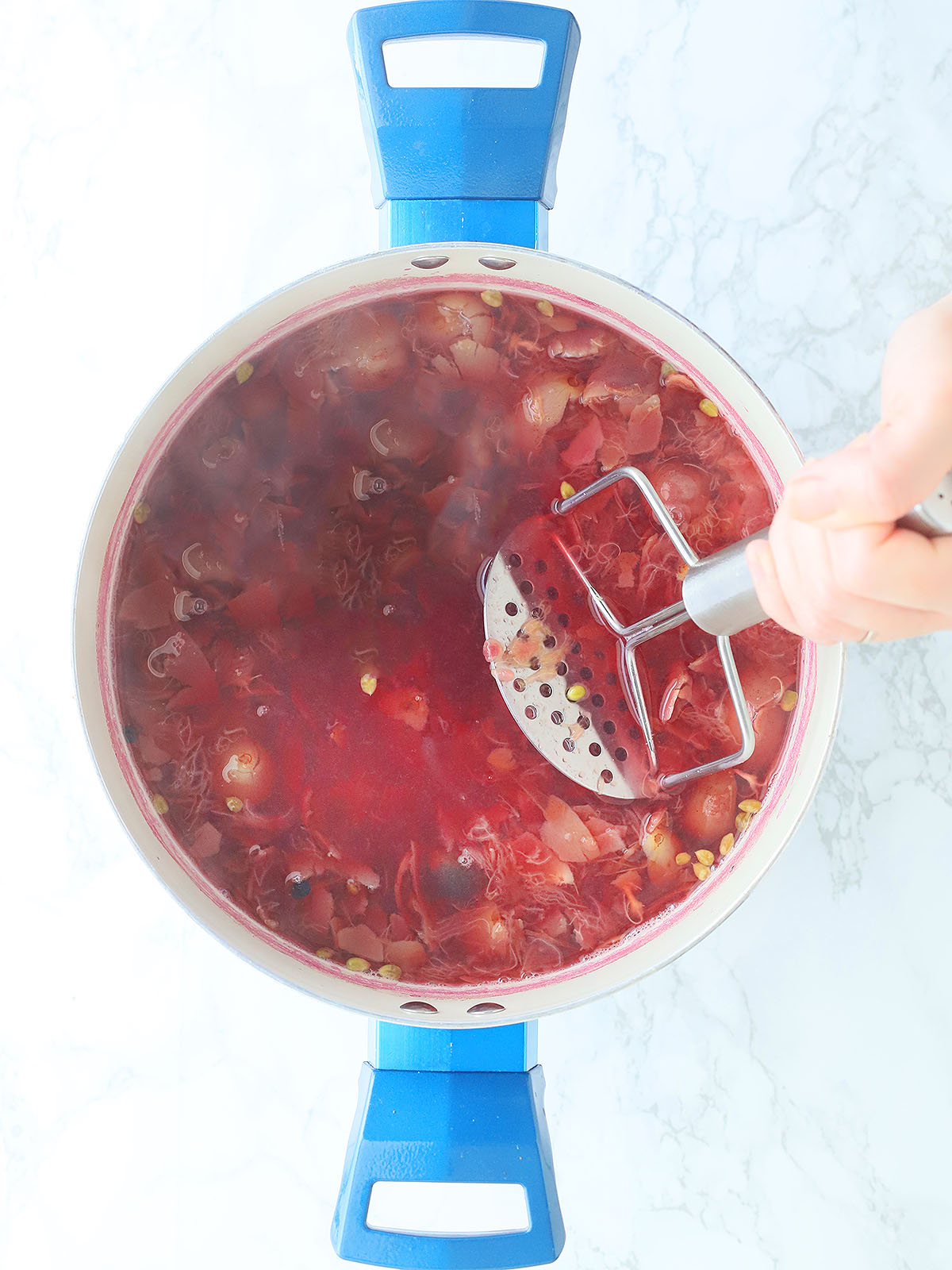
Step 2: Remove the pot from the heat and use a potato masher to gently crush the cooked muscadines. This helps release even more flavorful muscadine grape juice without crushing the seeds.
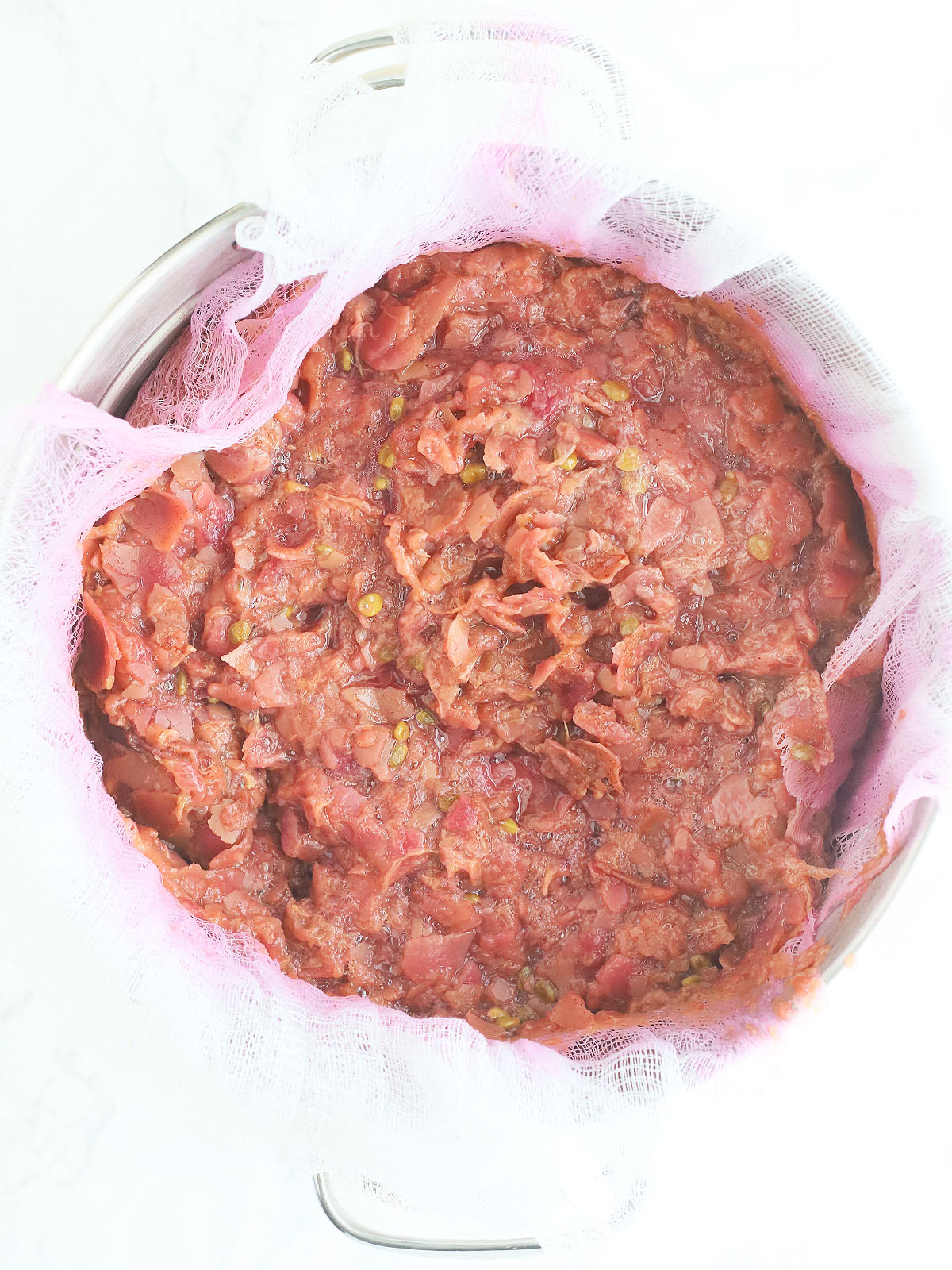
Step 3: Place a fine-mesh sieve lined with cheesecloth or a cloth jelly bag over a large bowl or another large stock pot. Carefully pour the mashed fruit into the strainer. Allow the juice to drain for about 30 minutes. For the clearest homemade jelly, let gravity do most of the work. If you don’t mind slightly cloudy jelly, gently press on the fruit to extract a little more juice. Discard the solids and measure the remaining muscadine juice. You should have 10 cups of juice. If you’re a little short, simply add enough water to reach the full amount.
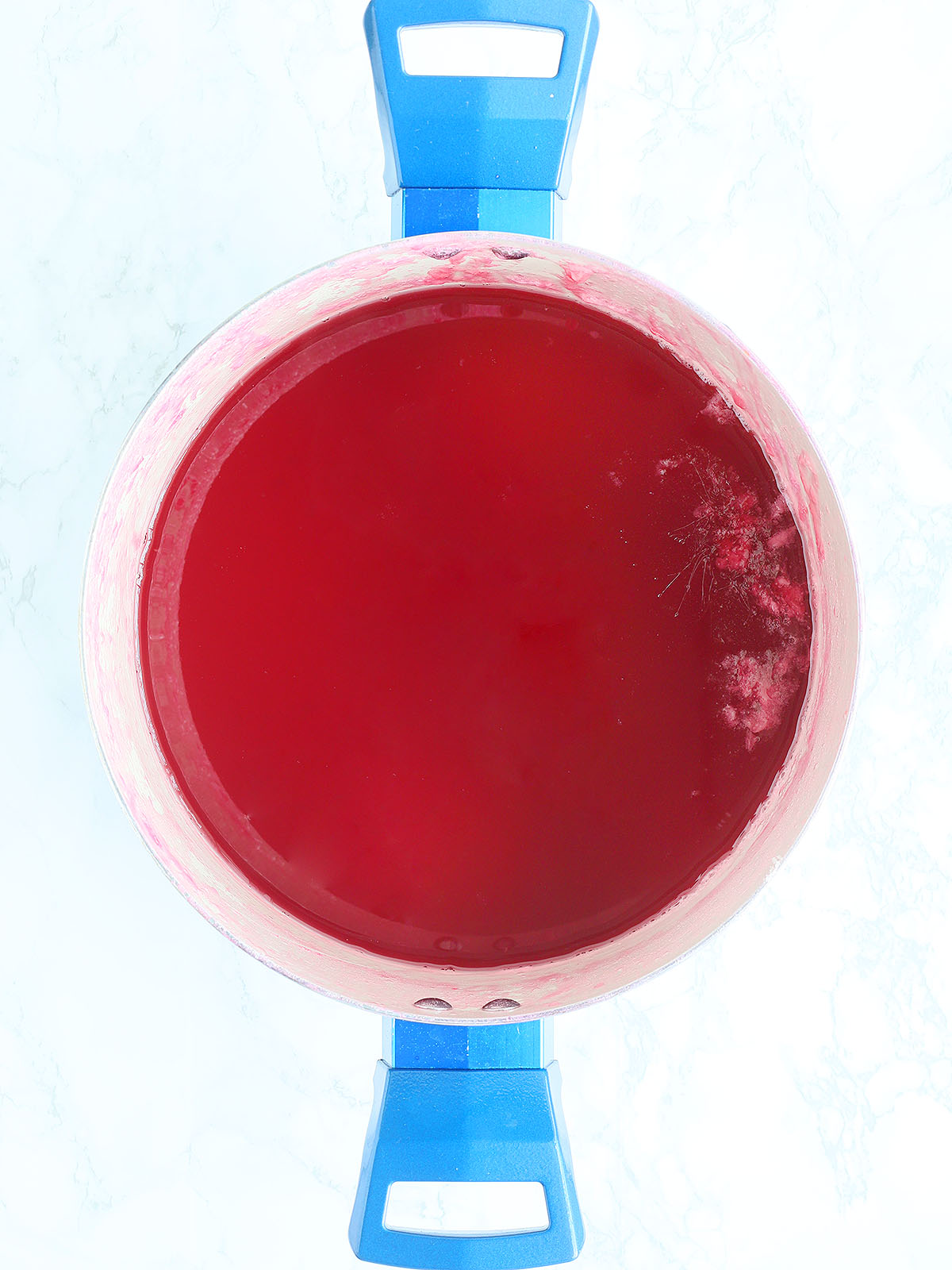
Step 4: Pour the measured muscadine juice into a clean large pot. Whisk in the fruit pectin until the pectin mix is completely dissolved. Bring the mixture to a full rolling boil over high heat. A full rolling boil means the liquid continues to boil vigorously even while you’re stirring. Once the juice reaches a rolling boil, stir in the 6 cups of sugar all at once. Continue stirring until the sugar dissolves, then boil for exactly one minute. Skim off any foam from the surface if needed.
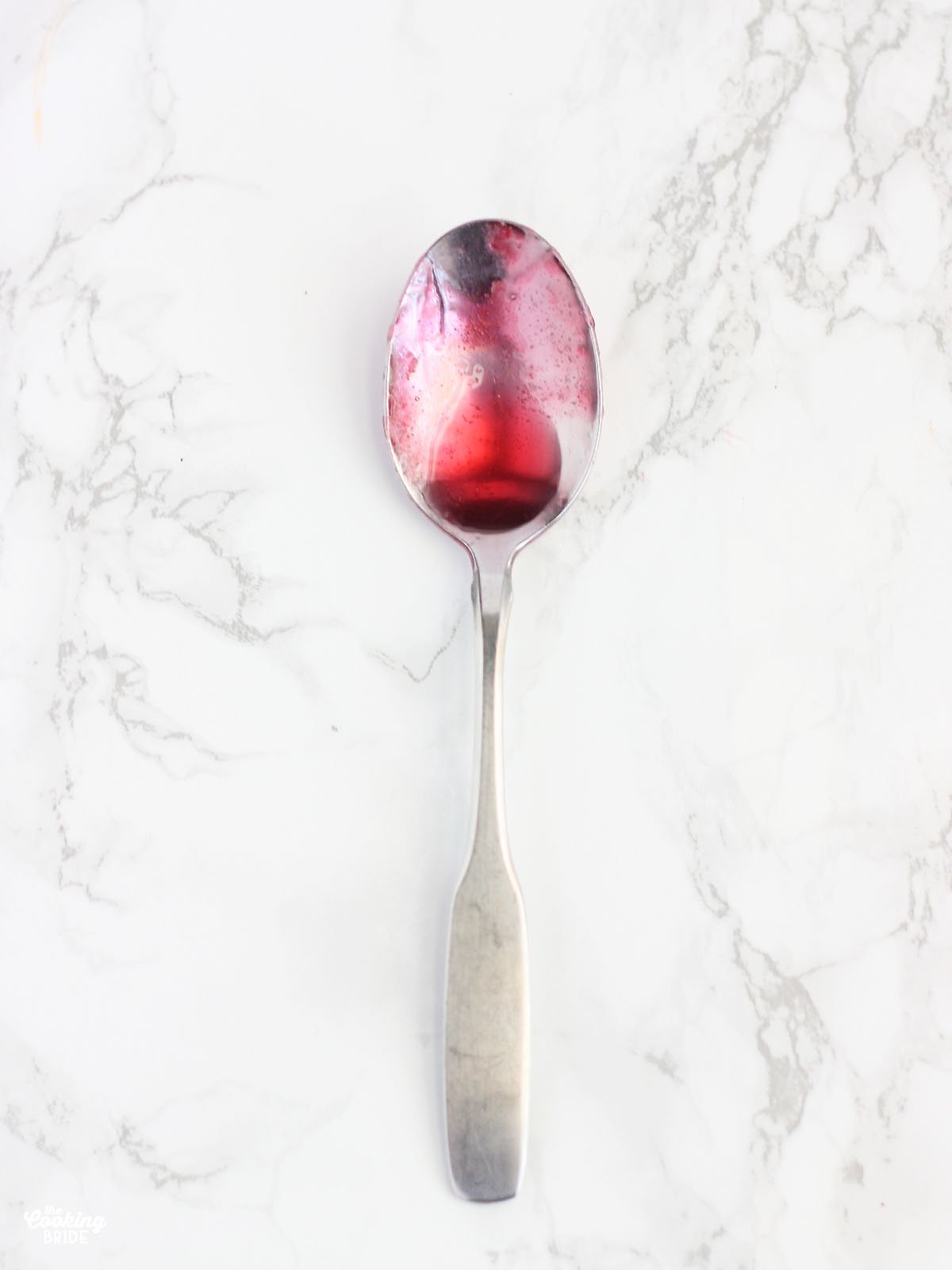
Step 5: Jelly continues to thicken as it cools, so it can be difficult to judge the consistency while the hot jelly is still bubbling. Before you begin cooking, place a few metal spoons in the freezer. After the one-minute boil, remove one spoon and place a small amount of jelly on it. Let it cool for a few seconds, then tilt the spoon. If the jelly mixture sheets off the spoon in one thick sheet instead of running in thin drops, it’s ready. If not, continue boiling for another minute and test again.
Recipe tip:
- Don’t throw away any extra juice! Refrigerate or freeze it to make another batch of muscadine jelly, scuppernong jelly, or even homemade grape syrup later.
- Don’t panic if your jelly seems thin. The final product may take until the next day—or even up to 48 hours—to fully set.
Serving suggestions
The sweet, floral flavor of muscadine jelly makes it much more versatile than your average grape jelly. Here are some of my favorite ways to enjoy it:
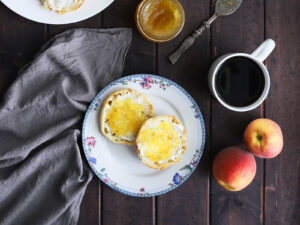
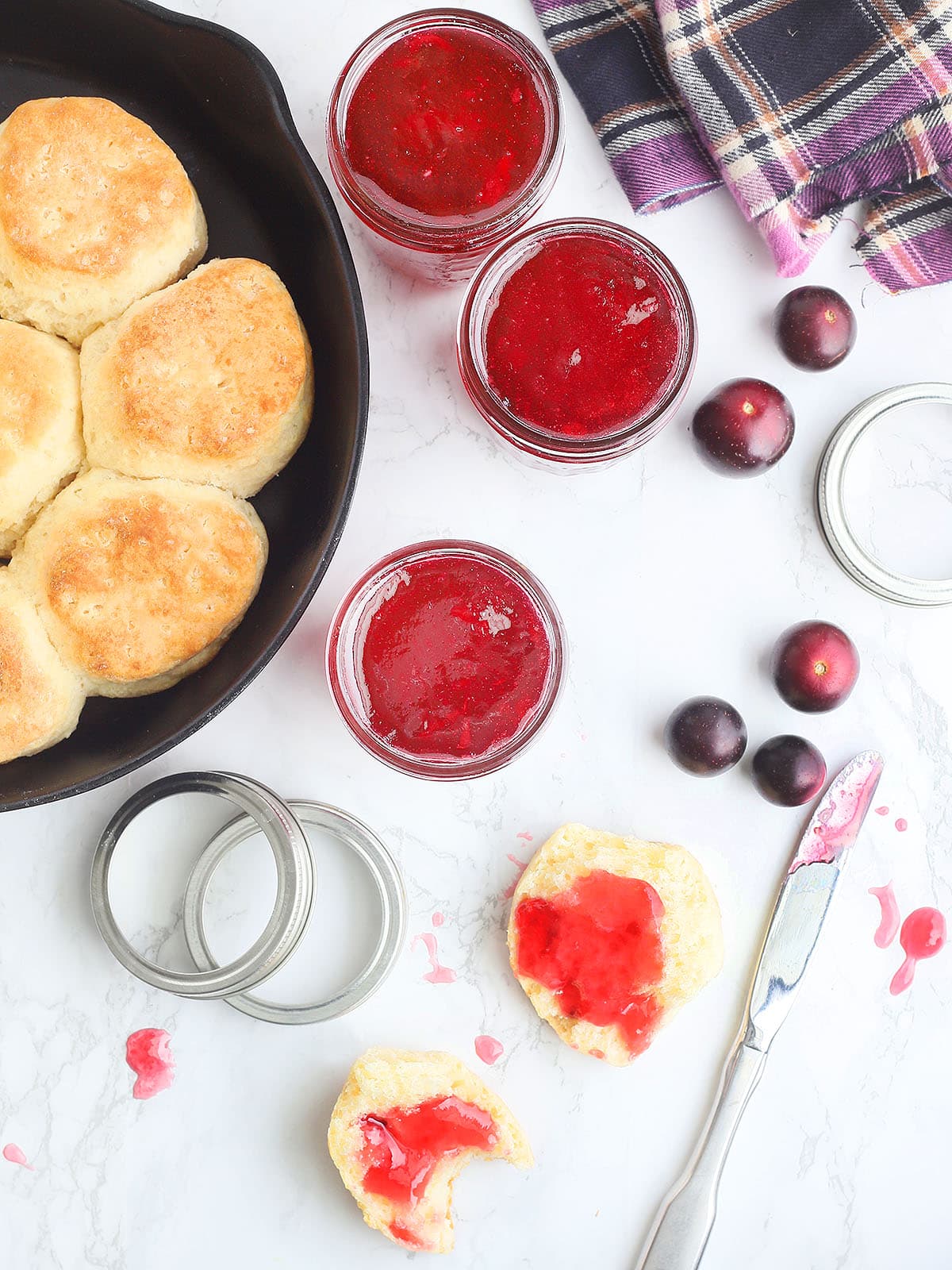
- Spread it on warm biscuits or toast. There’s nothing better than homemade muscadine jelly melting into a hot buttered buttermilk biscuit fresh from the oven.
- Build a Southern breakfast. Serve it alongside buttermilk pancakes, waffles, or homemade blueberry scones.
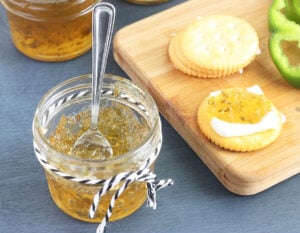
- Upgrade your cheese board. The sweet, fruity flavor pairs beautifully with sharp cheddar, creamy brie, goat cheese, and smoked gouda. Add crackers, toasted nuts, and fresh fruit for an easy appetizer.
- Use it as a glaze. Warm a few spoonfuls and brush it over homemade meatballs, pork tenderloin, grilled chicken, or spatchcock turkey during the last few minutes of cooking. It adds a beautiful shine and subtle sweetness to savory dishes.
- Stir it into yogurt or oatmeal. Swirl a spoonful into plain Greek yogurt, oatmeal, or overnight oats for a burst of fruity flavor.
- Top your favorite desserts. Warm the jelly slightly and drizzle it over vanilla ice cream, cheesecake, blueberry pound cake, or angel food cake.
- Make a peanut butter and jelly sandwich. If you love classic PB&J, homemade muscadine jelly gives it a delicious Southern twist.
- Use it as a pastry filling. Spread it between cake layers, fill thumbprint cookies, or spoon it into fried hand pies.
Storage instructions
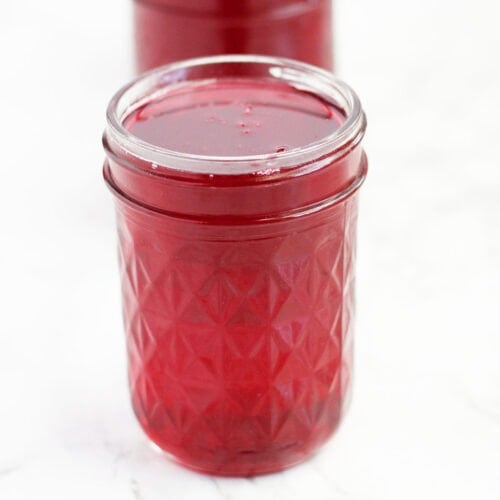
Freshly made muscadine jelly can be enjoyed right away, refrigerated for short-term storage, or preserved using water bath canning for long-term storage.
- Refrigerator: Store unopened or opened jars in the refrigerator for up to 1 month. Always use a clean utensil when serving to help extend its shelf life.
- Freezer: You can also freeze the jelly in freezer-safe containers, leaving about ½ inch of headspace for expansion. Freeze for up to 1 year and thaw overnight in the refrigerator before using.
- Pantry (Canned): If processed in a boiling water canner, sealed jars can be stored in a cool, dark place for up to 18 months. Once opened, refrigerate the jelly and use it within 1 month.
Canning instructions
If you’d like to enjoy your homemade muscadine jelly year-round, water bath canning is an easy and safe way to preserve it. Once processed, the jars can be stored in your pantry for up to 18 months.
- Prepare the canner. Fill a water bath canner with enough water to cover the jars by at least 1 inch of water. Bring the water to a gentle simmer while you prepare the jelly.
- Fill the jars. Ladle the hot jelly into hot, sterilized half-pint jars, leaving ¼-inch headspace.
- Remove air bubbles. Run a non-metallic utensil around the inside of each jar to release any trapped air bubbles. Add more jelly if needed to maintain the proper headspace.
- Clean the jar rims. Use a dampened clean paper towel to thoroughly wipe rims of jars. Even a small amount of sticky jelly can prevent the jars from sealing properly.
- Apply the lids. Center the two-piece metal canning lids on each jar and screw on the bands until they’re fingertip tight. Avoid overtightening, as air needs to escape during processing.
- Process the jars. Carefully lower the jars into the canner, making sure they’re covered by at least 1 inch of water. Increase the heat and bring the water to a full boil. Once the water reaches a rolling boil, process the jars according to the times below.
- Cool the jars. Turn off the heat and let the jars sit in the canner for 5 minutes. Remove the jars and place them on a towel-lined counter. Let them cool undisturbed at room temperature for 12 to 24 hours.
- Check the seals. After the jars have cooled, press the center of each lid. A properly sealed lid will not flex or pop when pressed. Refrigerate any jars that didn’t seal and use them within one month.
Water bath processing times
| Altitude | Processing Time |
|---|---|
| 0–1,000 feet | 5 minutes |
| 1,001–6,000 feet | 10 minutes |
| 10 minutes | 15 minutes |
Canning tip:
Resist the urge to tighten the bands or press on the lids while the jars are cooling. Let the jars seal naturally for the best results.
Frequently Asked Questions
If you end up with less than 10 cups of muscadine juice, simply add enough water to reach the full amount. If you have extra juice, refrigerate or freeze it for another batch of jelly.
Muscadine grapes should be stored in a closed container or freezer bag in the refrigerator and used within one week.
I don’t recommend it. While some recipes rely on a longer boiling process, I’ve found using fruit pectin produces much more consistent results. It creates a reliable set while preserving the fresh, fruity flavor of the muscadines.
If your jelly is still runny after 48 hours, you can remake it with additional pectin. Follow the directions included with your pectin for remaking soft jelly, or see the troubleshooting section above for detailed instructions.
Yes, but only if you’re using a low-sugar fruit pectin. Follow the manufacturer’s recommendations, as reducing the sugar too much can affect both the texture and the shelf stability of the jelly.
Yes, but with some adjustments. Powdered pectin is added before cooking. Liquid pectin is added after. The measurements also differ: 1 tablespoon of liquid pectin = 2 teaspoons of powdered pectin. So for this recipe, use 9 tablespoons of liquid pectin to replace the 6 tablespoons of powdered.
The juice will last for a week to 10 days if stored in an airtight container in the refrigerator.
Yes. Freeze the juice in freezer safe containers, leaving an inch or two at the top for expansion. The juice can also be stored in freezer bags. Fill the bags about ⅔ full, seal and lay flat until frozen. Then the bags can be stacked to take up less room. The juice can be frozen for up to one year.
Sometimes placing a lid over hot liquid in a jar can create the appearance that the jar is sealed. It’s not. If you want to store the jars on a shelf long term, you must water bath can them first to not only kill any bacteria that can lead to food poisoning, but also to seal the jar and prevent bacteria from forming later.
Cloudy jelly is usually caused by pressing the cooked fruit too firmly while extracting the juice. For the clearest jelly, allow the muscadine juice to drain naturally through a cheesecloth-lined sieve or cloth jelly bag without squeezing.
Yes! This recipe can easily be cut in half if you don’t need a large batch. Simply reduce all of the ingredients by half and follow the recipe as written. The cooking times remain the same. A half batch requires 2½ pounds whole muscadine grapes, 4 cups water (or enough to cover the grapes by about 1 inch), 3 tablespoons low-sugar bulk pectin (or half of a 1.75-ounce box), and 3 cups granulated sugar. A half batch will yield approximately half-pint jars of muscadine jelly. If you’re using boxed pectin, measuring tablespoons of pectin or weighing half the package with a kitchen scale will give you the most accurate results.
Tried This Recipe? Let Me Know!
⭐️⭐️⭐️⭐️⭐️
If you made muscadine jelly, I’d love to hear how it turned out! Your ratings and reviews help others find the recipe and give me great feedback too.
Muscadine Jelly
Ingredients
- 5 pounds whole muscadine grapes
- 8 cups of water
- 1 (1.75 ounce) box low-sugar pectin, (or 6 tablespoons bulk pectin)
- 6 cups white granulated sugar
Instructions
- Rinse the muscadines in a colander under cold water.
- Transfer the muscadines to a large stockpot. Add enough water to cover the grapes by about 1 inch. Depending on the size of your pot, you may need slightly more or less than 8 cups of water.
- Bring the water to a boil over medium-high heat. Reduce the heat to a simmer and cook the muscadines for 20–25 minutes, or until they're soft and the skins begin to split.
- Remove the muscadines from the heat. Mash the grapes with a potato masher.
- Place a fine-mesh sieve over a large bowl or stockpot. If using a colander, line the colander with three layers of cheesecloth.
- Carefully pour the cooked muscadines into the prepared sieve. Let the juice strain for about 30 minutes, gently pressing the fruit every few minutes with a potato masher or the back of a spoon to extract as much juice as possible. You should end up with about 10 cups of muscadine juice.
- Remove and discard the cheesecloth with the muscadine solids.
- Return the 10 cups of muscadine juice to the stockpot. Whisk in the pectin until completely dissolved. Bring the mixture to a full rolling boil.
- Stir in the sugar and return the mixture to a full rolling boil. Boil for exactly 1 minute, stirring constantly.
- Remove the pot from the heat. Skim off any foam from the surface.
- Ladle the hot jelly into hot, sterilized jars, leaving ¼-inch headspace. Wipe the rims clean, apply the lids, and screw on the bands until fingertip tight.
- Muscadine jelly will keep for up to one month in the refrigerator. It can also be preserved using the water bath canning method. Once canned, the jelly will last for up to 18 months if stored in a cool, dry place.
Video
Notes
- This recipe should yield approximately (10) half-pint jars.
- Use ripe muscadines. The sweetest, most flavorful jelly starts with ripe muscadine grapes. Look for plump fruit with smooth skins and avoid any that are shriveled or moldy.
- Measure the juice, not the fruit. After straining, you’ll need 10 cups of muscadine juice. If you come up short, add enough water to reach the full amount. If you have extra juice, refrigerate or freeze it for another batch.
- Don’t skip the pectin. Muscadines contain natural pectin, but the amount can vary. Using commercial low-sugar fruit pectin ensures your jelly sets properly every time.
- Wait for a full rolling boil. Before adding the sugar, make sure the juice reaches a boil that doesn’t stop bubbling when stirred. This is essential for activating the pectin and creating a good gel.
- Give the jelly time to set. Homemade jelly continues to thicken as it cools. It may take 24 to 48 hours to reach its final consistency, so don’t judge the texture while it’s still hot.
- For clearer jelly, don’t over-press the fruit. Gently pressing the cooked muscadines will extract a little more juice, but squeezing too hard can force pulp through the cheesecloth and result in cloudy jelly.
- Skim the foam. Removing the foam after cooking gives the finished jars a clearer, more attractive appearance, but it won’t affect the flavor or safety of the jelly.
- Always test your seals. After water bath canning, let the jars cool undisturbed for 12 to 24 hours. The center of each lid should be slightly concave and not flex when pressed. Refrigerate any jars that don’t seal and use them first.
- Label your jars. Write the date on each jar so you know when it was canned. Properly processed muscadine jelly can be stored in a cool, dark place for up to 18 months.