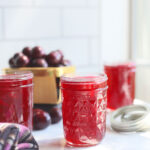
Muscadine Jelly
Turn fresh muscadine grapes into sweet, homemade muscadine jelly with this easy recipe. Includes water bath canning instructions and helpful tips.
Servings 10 (8-ounce) jars
Calories 56kcal
Ingredients
- 5 pounds whole muscadine grapes
- 8 cups of water
- 1 (1.75 ounce) box low-sugar pectin, (or 6 tablespoons bulk pectin)
- 6 cups white granulated sugar
Instructions
- Rinse the muscadines in a colander under cold water.
- Transfer the muscadines to a large stockpot. Add enough water to cover the grapes by about 1 inch. Depending on the size of your pot, you may need slightly more or less than 8 cups of water.
- Bring the water to a boil over medium-high heat. Reduce the heat to a simmer and cook the muscadines for 20–25 minutes, or until they're soft and the skins begin to split.
- Remove the muscadines from the heat. Mash the grapes with a potato masher.
- Place a fine-mesh sieve over a large bowl or stockpot. If using a colander, line the colander with three layers of cheesecloth.
- Carefully pour the cooked muscadines into the prepared sieve. Let the juice strain for about 30 minutes, gently pressing the fruit every few minutes with a potato masher or the back of a spoon to extract as much juice as possible. You should end up with about 10 cups of muscadine juice.
- Remove and discard the cheesecloth with the muscadine solids.
- Return the 10 cups of muscadine juice to the stockpot. Whisk in the pectin until completely dissolved. Bring the mixture to a full rolling boil.
- Stir in the sugar and return the mixture to a full rolling boil. Boil for exactly 1 minute, stirring constantly.
- Remove the pot from the heat. Skim off any foam from the surface.
- Ladle the hot jelly into hot, sterilized jars, leaving ¼-inch headspace. Wipe the rims clean, apply the lids, and screw on the bands until fingertip tight.
- Muscadine jelly will keep for up to one month in the refrigerator. It can also be preserved using the water bath canning method. Once canned, the jelly will last for up to 18 months if stored in a cool, dry place.
Video
Notes
- This recipe should yield approximately (10) half-pint jars.
- Use ripe muscadines. The sweetest, most flavorful jelly starts with ripe muscadine grapes. Look for plump fruit with smooth skins and avoid any that are shriveled or moldy.
- Measure the juice, not the fruit. After straining, you'll need 10 cups of muscadine juice. If you come up short, add enough water to reach the full amount. If you have extra juice, refrigerate or freeze it for another batch.
- Don't skip the pectin. Muscadines contain natural pectin, but the amount can vary. Using commercial low-sugar fruit pectin ensures your jelly sets properly every time.
- Wait for a full rolling boil. Before adding the sugar, make sure the juice reaches a boil that doesn't stop bubbling when stirred. This is essential for activating the pectin and creating a good gel.
- Give the jelly time to set. Homemade jelly continues to thicken as it cools. It may take 24 to 48 hours to reach its final consistency, so don't judge the texture while it's still hot.
- For clearer jelly, don't over-press the fruit. Gently pressing the cooked muscadines will extract a little more juice, but squeezing too hard can force pulp through the cheesecloth and result in cloudy jelly.
- Skim the foam. Removing the foam after cooking gives the finished jars a clearer, more attractive appearance, but it won't affect the flavor or safety of the jelly.
- Always test your seals. After water bath canning, let the jars cool undisturbed for 12 to 24 hours. The center of each lid should be slightly concave and not flex when pressed. Refrigerate any jars that don't seal and use them first.
- Label your jars. Write the date on each jar so you know when it was canned. Properly processed muscadine jelly can be stored in a cool, dark place for up to 18 months.
Nutrition
Serving: 2tbsps | Calories: 56kcal | Carbohydrates: 14g | Sodium: 1mg | Potassium: 20mg | Sugar: 14g | Vitamin A: 5IU | Vitamin C: 1mg | Calcium: 2mg | Iron: 0.1mg
