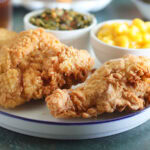
Buttermilk Brined Fried Chicken
Crispy buttermilk-brined fried chicken, made with juicy chicken legs and thighs, is coated in a seasoned batter and flour dredge, then fried until golden brown and crunchy.
Servings 4 people
Calories 620kcal
Ingredients
Buttermilk Brine:
- 2 cups buttermilk
- 2 teaspoons kosher salt
- 1 teaspoon hot sauce (optional)
- 3 pounds chicken pieces legs & thighs
Seasoned Flour Dredge:
- 3 cups flour
- ½ cup cornstarch
- ½ teaspoon baking soda
- 2 tablespoon all-purpose seasoning
- 1 teaspoon paprika
- 1 teaspoon onion powder
- ½ teaspoon cayenne optional
Batter:
- 1 cup buttermilk
- 2 eggs
- 1 ½ cups seasoned flour
- Oil for frying
Instructions
- In a large mixing bowl, combine the buttermilk, salt, and hot sauce. Whisk until the salt is dissolved.
- Add the chicken pieces and toss until completely coated in the brine. Cover and refrigerate for 8–24 hours. Turn the chicken about halfway through the brining time to ensure all the pieces remain evenly coated.
- In a large bowl, whisk together the flour, cornstarch, baking soda, all-purpose seasoning, paprika, onion powder, and cayenne pepper. Measure 1 ½ cups of the seasoned flour and set aside for the batter.
- In a separate large bowl, whisk together 1 cup of buttermilk and the eggs. Add the reserved 1 ½ cups of seasoned flour and whisk until combined.
- Remove the chicken pieces from the buttermilk brine and allow the excess buttermilk to drip off. Dip each piece in the batter, allowing the excess to drip off, then coat thoroughly in the remaining seasoned flour.
- Arrange the coated chicken in a single layer on a baking sheet. Refrigerate, uncovered, for 15–30 minutes to allow the coating to adhere.
- Meanwhile, fill a large, deep skillet or Dutch oven with enough oil for the chicken pieces to float freely without touching the bottom. Heat the oil to 315–325°F.
- Working in batches, carefully add the chicken to the hot oil. Do not overcrowd the pan. Fry the chicken legs for 14–16 minutes and the thighs for 15–18 minutes, or until the internal temperature reaches at least 165°F. For more tender dark meat, continue cooking until the internal temperature reaches 175–185°F. Check the temperature in the thickest part of the meat without touching the bone.
- Transfer the fried chicken to a wire rack set over a baking sheet. Allow it to drain and rest for five minutes before serving.
Video
Notes
- Nutrition for 1 serving = 1 fried chicken drumstick + 1 fried chicken thigh. Because the amount of breading and frying oil actually absorbed can vary quite a bit, nutrition values are are estimates.
- For extra-crispy chicken: After removing the chicken from the brine, coat each piece in the seasoned flour first, followed by the batter and then another coating of seasoned flour.
- Don't skip the resting period. Refrigerating the coated chicken for 15–30 minutes gives the flour time to hydrate and helps the breading adhere during frying.
- Maintain the oil temperature. Try to keep the oil between 315–325°F. If the temperature drops too low, the coating can absorb excess oil. If it gets too hot, the crust may brown before the chicken is cooked through.
- Fry in batches. Overcrowding the pan causes the oil temperature to drop and can prevent the chicken from getting crisp.
- Skip the baking powder. I tested the coating with baking powder and found that it puffed up more than my family and I preferred. Baking soda and cornstarch give the coating the crisp, craggy texture we're looking for without excessive puffing.
- Use a wire rack instead of paper towels. Air can circulate around the chicken, helping the crust stay crisp while excess oil drains away.
Nutrition
Serving: 1serving | Calories: 620kcal | Carbohydrates: 38g | Protein: 38g | Fat: 36g | Saturated Fat: 9g | Polyunsaturated Fat: 9g | Monounsaturated Fat: 15g | Cholesterol: 180mg | Sodium: 1250mg | Potassium: 520mg | Fiber: 1g | Sugar: 3g | Vitamin A: 350IU | Vitamin C: 1mg | Calcium: 110mg | Iron: 3mg
