
Meringue for a Pie
Learn how to make meringue for a pie with this easy basic meringue recipe. Light, fluffy, and perfectly toasted, this foolproof pie meringue comes together with just a few simple ingredients.
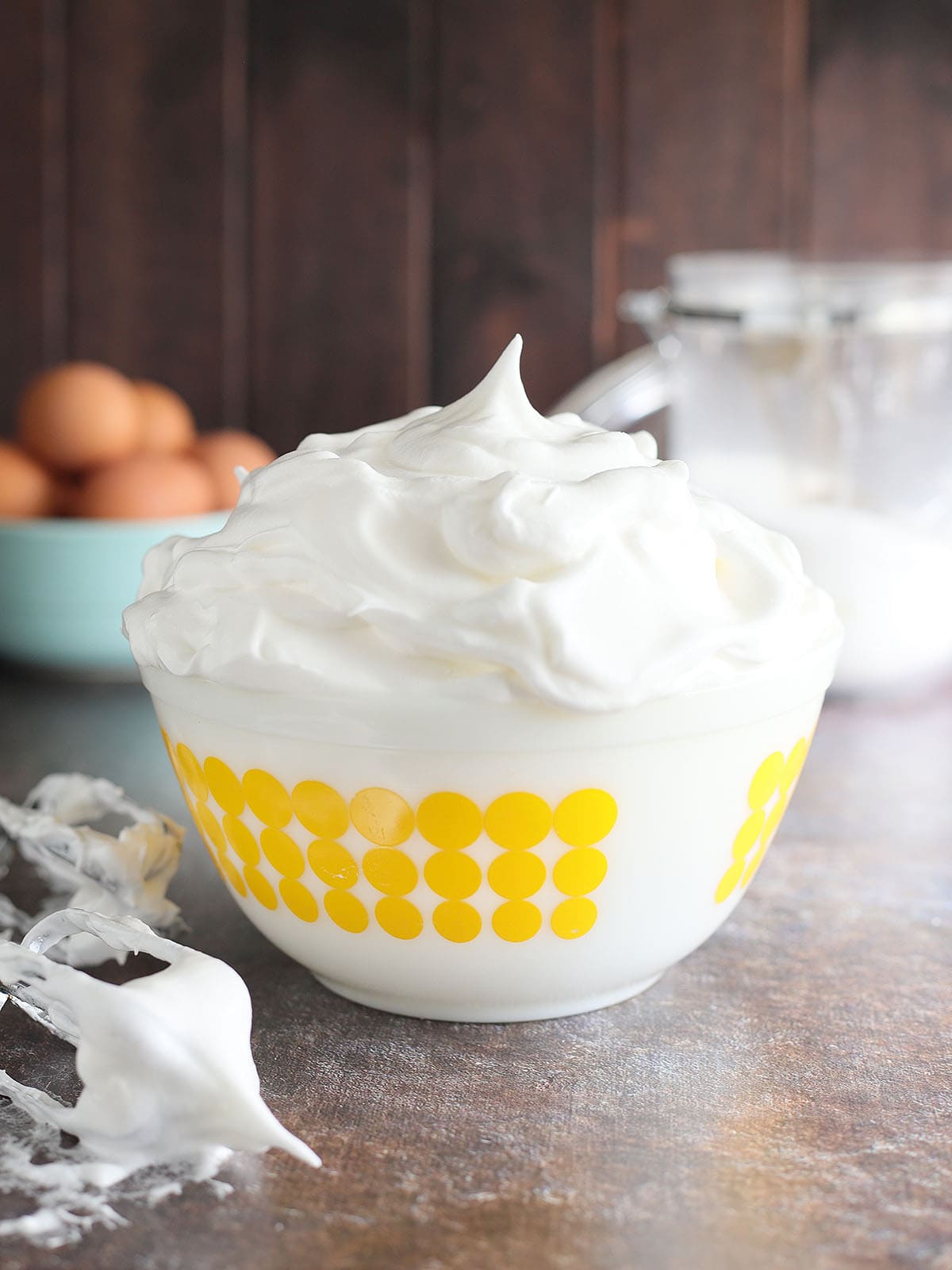
As a kid, I remember eating at the Crystal Grill in Greenwood, Mississippi. The place was legendary—open nearly a century—but I was mesmerized by their Mile High Meringue pies. They looked like fancy Easter bonnets in the glass case, each one topped with inches of fluffy, cloud-like meringue.
Meringue is like a crown—it can turn an ordinary pie into a showstopper. And if you’ve never made it before, don’t worry. It’s as “easy as pie.”
“I think this is the best tutorial on how to make meringue that I’ve come across so far. Thank you!”
– Audrea
Recipe at a glance
- Just three simple ingredients. No fancy ingredients required.
- Beginner-friendly. If you’ve been wondering how to make meringue for a pie, this walks you through it step by step.
- Light, fluffy, and glossy. That beautiful pie meringue look with tall, dramatic peaks.
- Perfectly toasty topping. It browns beautifully and tastes like a soft marshmallow cloud.
- Versatile. Works for lemon, chocolate, coconut cream — any pie that needs a little crown on top.
- A dependable basic meringue recipe. Once you master this, you’ll never second-guess how to make a meringue for a pie again.
What is meringue?
At its most basic, meringue is simply egg whites and sugar. When you beat them with a whisk or electric mixer, air is whipped into the mixture. That trapped air is what makes the egg whites stiff, glossy, and beautifully puffed up.
There are three types of meringue:
- French meringue – The most common and simplest style. Egg whites are beaten to soft peaks, then sugar is gradually added and whipped until stiff peaks form. This is the type we’re focusing on here.
- Italian meringue – Made by pouring hot sugar syrup (heated to the soft-ball stage, 236°F–240°F) into egg whites that have reached soft peaks, then beating to stiff peaks. It’s sturdy and silky, making it ideal for buttercream frostings and mousse.
- Swiss meringue – Sugar and egg whites are gently heated together over simmering water before being whipped. This method creates a smooth, stable meringue often used for baked meringue desserts and toppings.
Summarize and save this content on
Jump to:
Ingredients you will need
If you’ve been searching for a dependable pie meringue you can trust, this is it. To make this meringue topping, you will need:
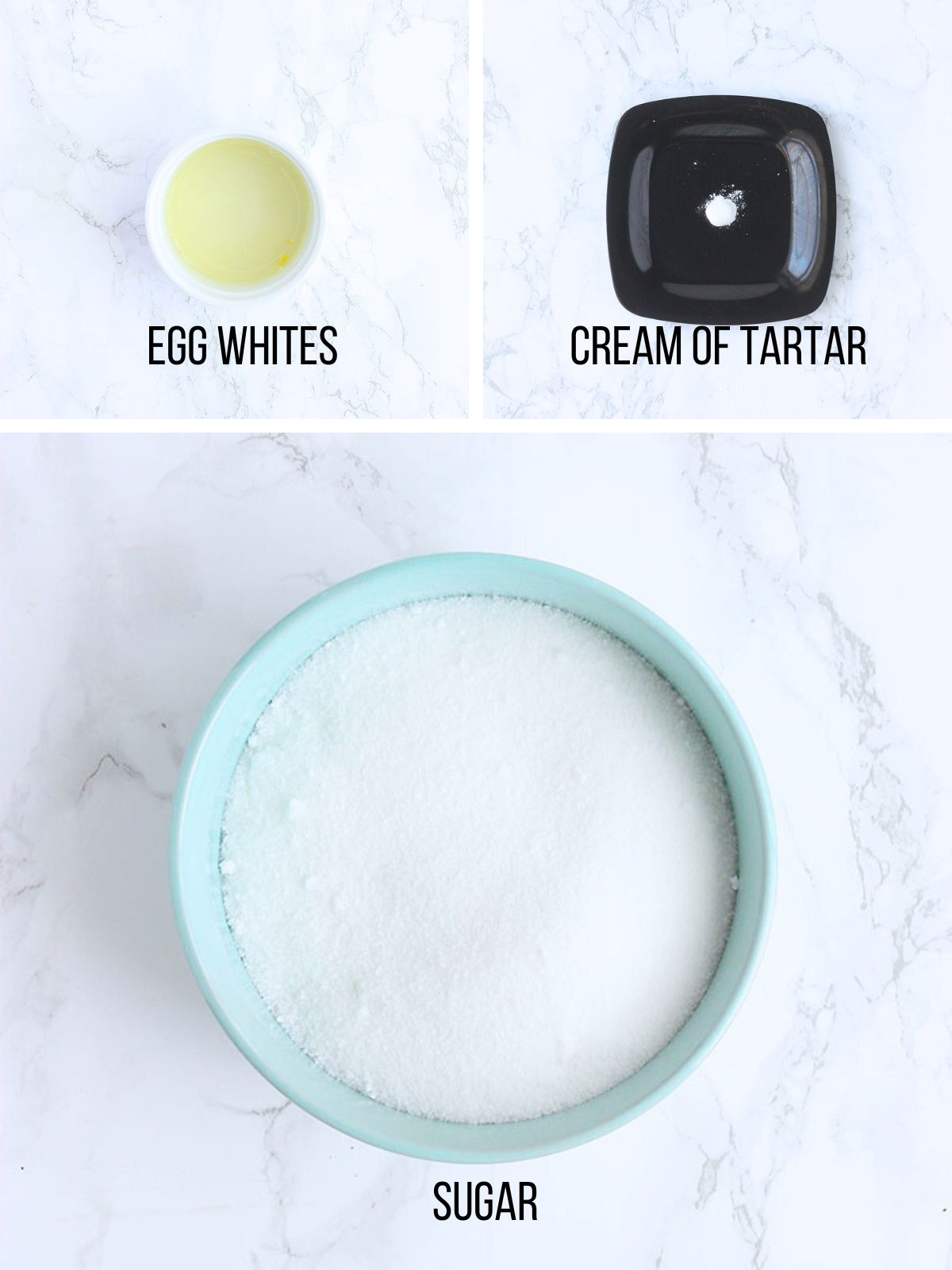
See the recipe card for full information on ingredients and quantities.
- Egg whites – The foundation of any pie meringue. When whipped, egg whites trap air and create volume. For the best results, let them come to room temperature first — they whip up higher and fluffier. Save your egg yolks and whip up a batch of this easy blender hollandaise sauce.
- White sugar – Sugar sweetens the meringue, but it also stabilizes it. Adding it slowly helps create that glossy texture and those tall, sturdy peaks. It’s the key to getting that beautiful, bakery-style meringue for a pie.
- Cream of tartar – Cream of tartar is an acidic salt that acts as a stabilizer for the meringue. It helps the eggs whites hold more air and reach their full volume, It’s like what Aqua Net was to big hair in the 80’s. This small but mighty ingredient helps stabilize the egg whites and keeps them from collapsing. It also helps the meringue hold its shape while baking.
Substitutions and variations
This pie meringue is wonderfully simple, but here are a few ways you can adjust it if needed:
No Cream of Tartar? If you’re wondering how to make a meringue for a pie without cream of tartar, you can substitute:
- ½ teaspoon lemon juice
- ½ teaspoon white vinegar
Both help stabilize the egg whites the same way cream of tartar does.
Superfine Sugar – Granulated sugar works perfectly, but superfine (caster) sugar dissolves even more easily and can give you an extra-smooth texture. If you’ve ever struggled with gritty meringue, this can help.
Flavored Meringue – Want to upgrade your meringue for a pie?
- Add ½ teaspoon vanilla extract for a subtle warmth.
- A pinch of almond extract pairs beautifully with coconut or chocolate pies.
- A tiny pinch of salt enhances sweetness and balances flavor.
Toasted Peaks – For more dramatic color, use the broiler for 30–60 seconds at the end of baking — but don’t walk away. It browns quickly.
Turn It Into Cookies – This same mixture works beautifully for meringue cookies. Pipe onto parchment paper and bake low and slow (around 200°F) until dry and crisp.
Once you learn how to make meringue, you’ll realize how flexible it really is — simple ingredients, lots of possibilities.
Tips for fluffy meringue
- Don’t use very fresh eggs. This is one case where fresh isn’t best. Slightly older eggs whip up higher and fluffier. To test your eggs, fill a glass with tap water and gently lower one in. If it sinks and lies flat on its side, it’s very fresh. If it stands upright on the bottom, it’s perfect for meringue. If it floats to the top, it’s too old and should be discarded.
- Separate your egg whites carefully from the yolks. When you crack an egg, the yellow center is the yolk and the clear surrounding portion is the white. For meringue, you only want the white. If even a small amount of yolk gets into the whites, you’ll need to start over. Fat from the yolk can prevent the whites from whipping properly.
- If you’re nervous about separating eggs, an egg separator can help. Use two bowls: crack the egg into a separator set over one bowl. If the white separates cleanly, transfer it to a second bowl. Repeat with the remaining eggs. That way, if a yolk breaks on the last egg, you’ve only lost one instead of the whole batch.
- Let the egg whites come to room temperature before whipping. Eggs separate more easily when cold, but room temperature whites whip up with more volume. Let them sit on the counter for about 30 minutes before beating.
- Always use a clean metal or glass bowl and whisk. Plastic bowls can hold trace amounts of grease, which can prevent the whites from whipping to full volume. Make sure everything is completely clean and dry before you begin. If you are unsure, wipe the bowl out with vinegar to be extra safe.
- Don’t rush adding in the sugar. If you dump it in all at once, you’ll deflate your volume.
How to Make Meringue for a Pie
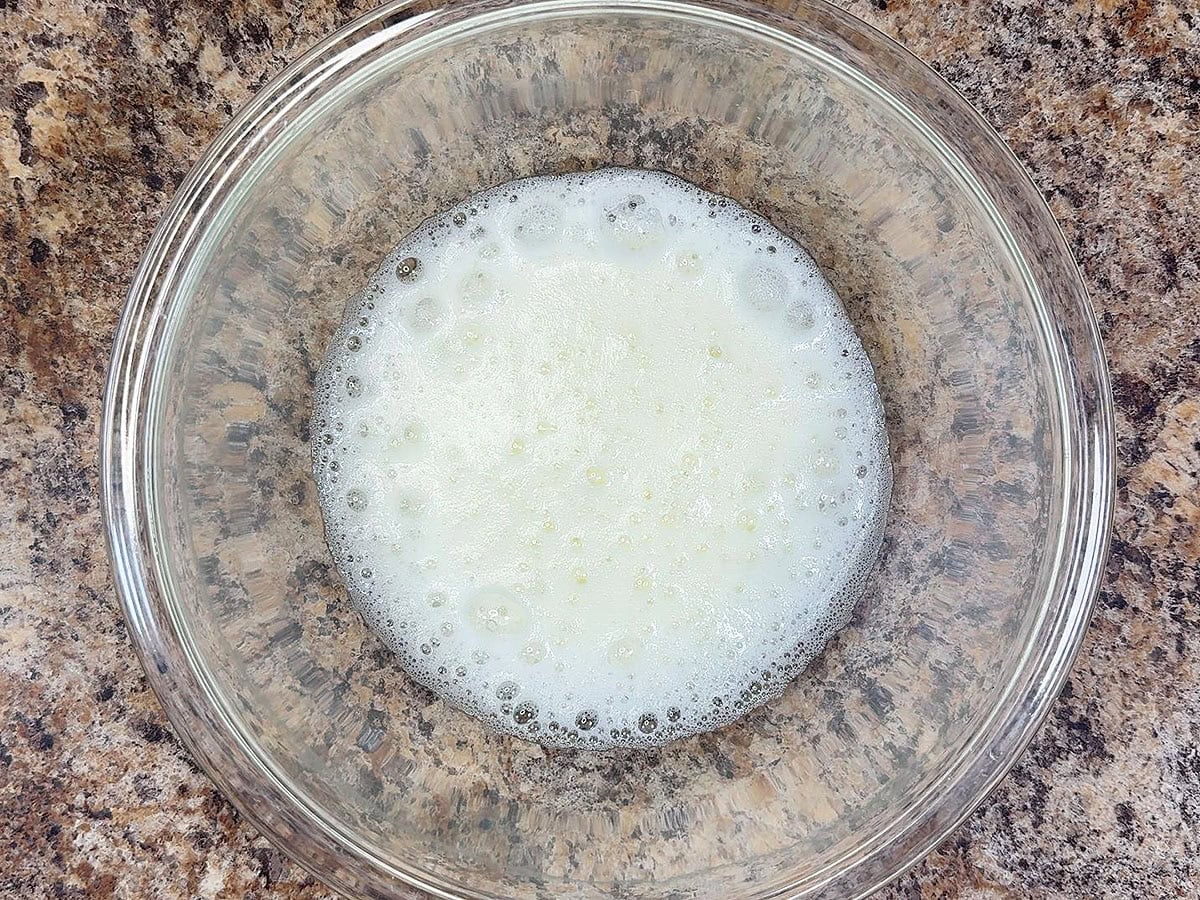
Step 1: In a clean, dry glass or metal mixing bowl, beat the egg whites with cream of tartar on medium speed. Once they’re bubbly and foamy, you’re on the right track.
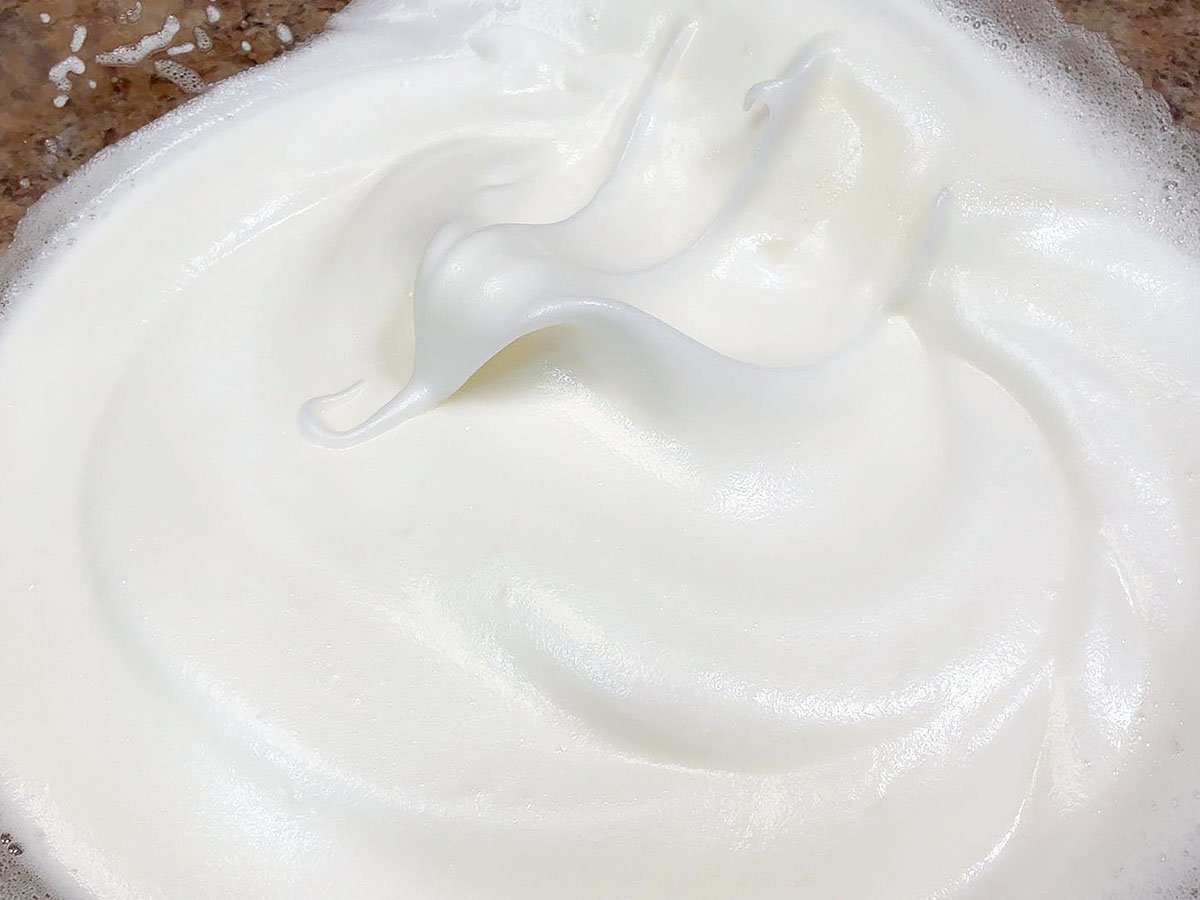
Step 2: Add the sugar one tablespoon at a time, beating well between each addition. At this stage, when you lift the mixer, the tip will fold over. That’s called soft peaks.
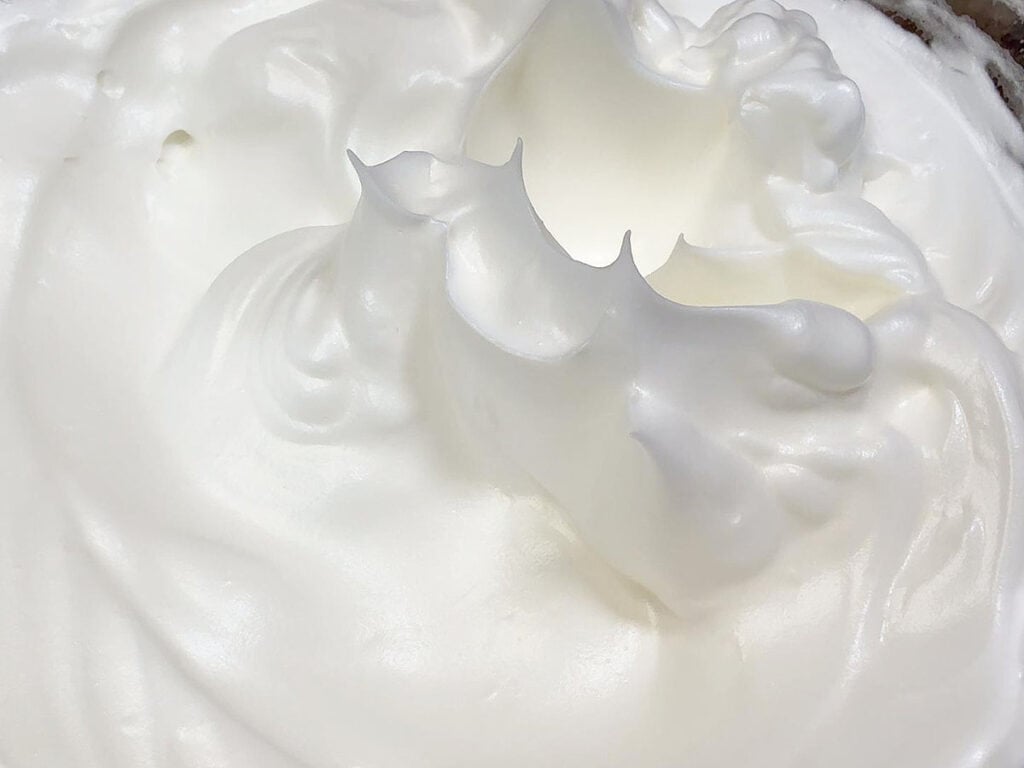
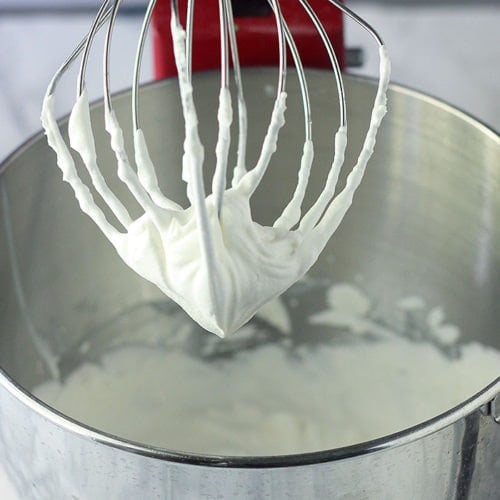
Step 3: Keep beating until the meringue becomes thick, glossy, and holds a firm peak that stands straight up when you lift the mixer. This is stiff peaks.
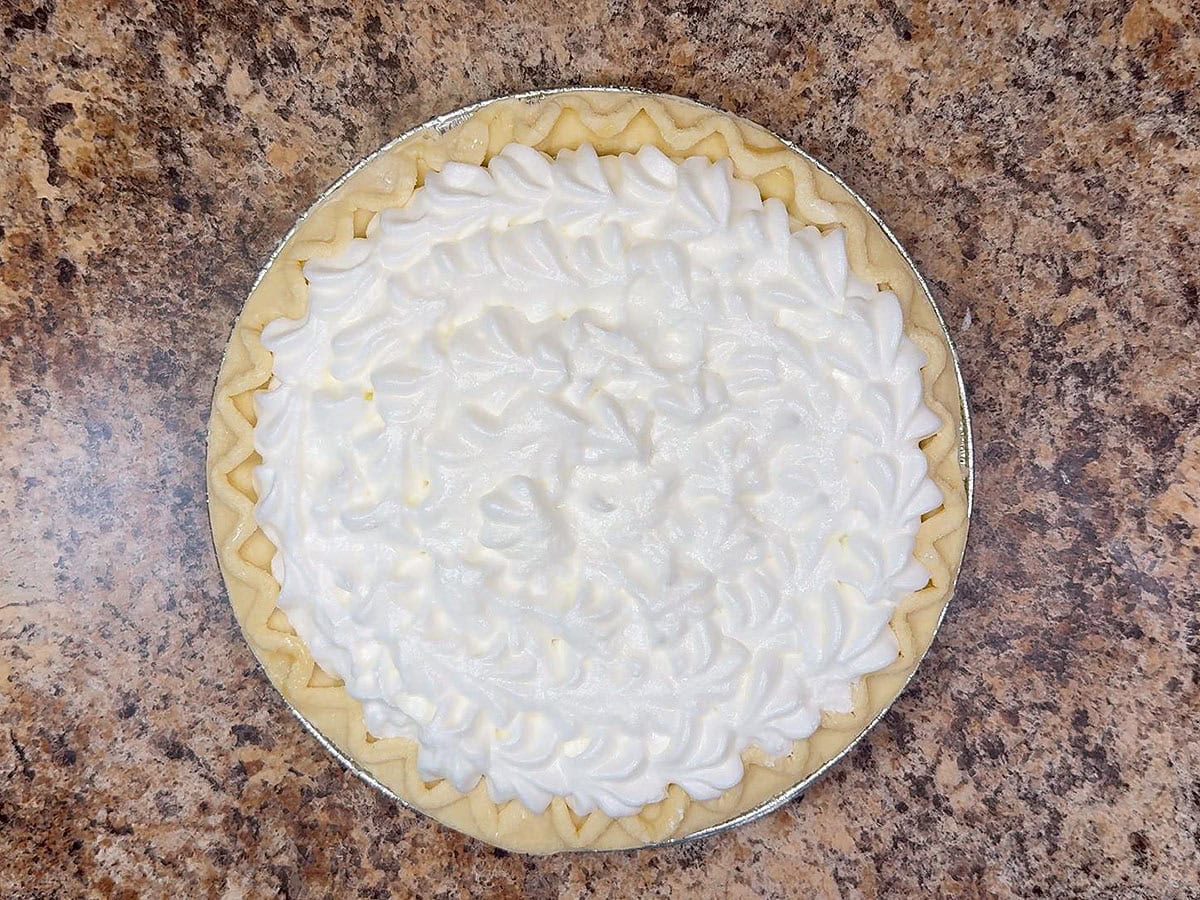
Step 4: Spread or pipe the billowy meringue over the top of the entire pie right after it comes out of the oven. Make sure to spread it all the way to the edges where the pie filling meets the pie shell, sealing it against the crust. This helps prevent shrinking and weeping.
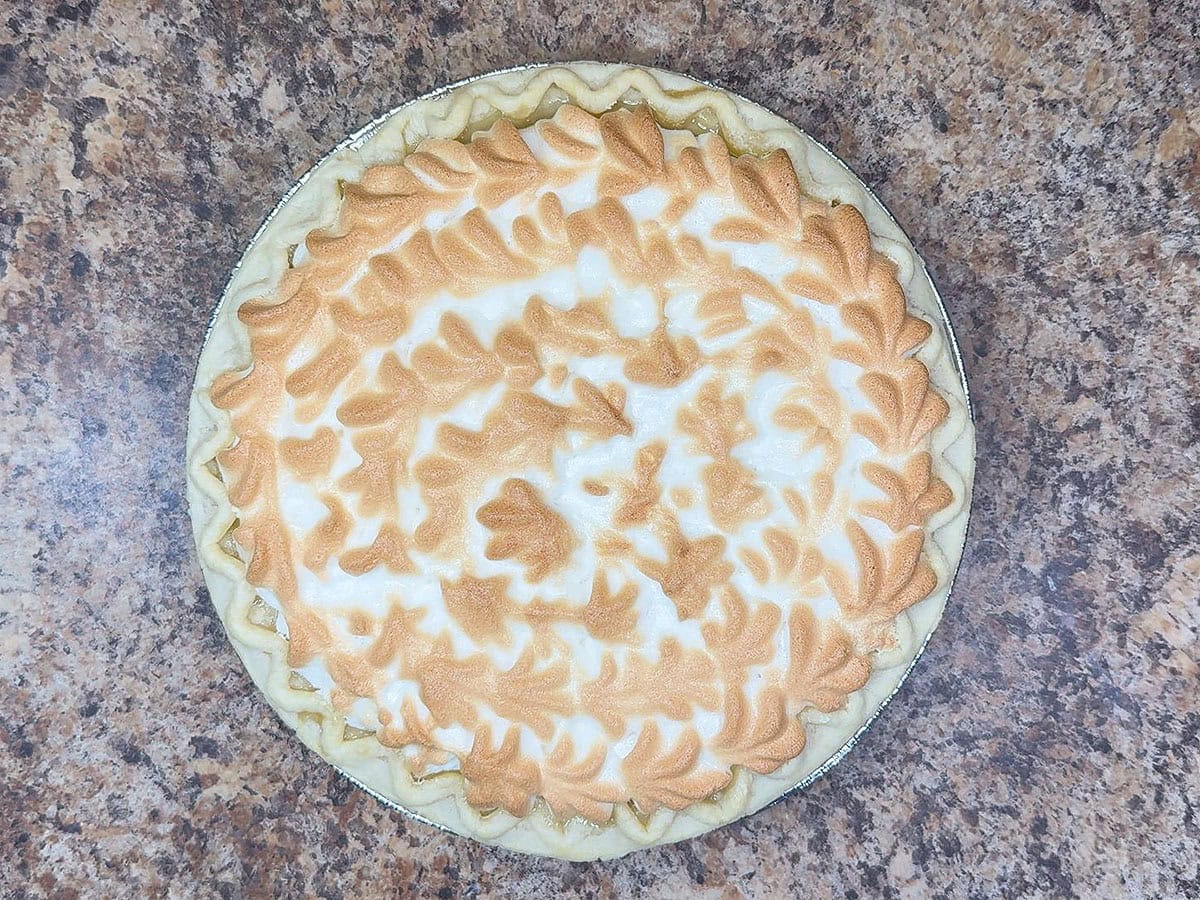
Step 5: Keep the oven at whatever temperature you used to bake the pie. If you are just toasting meringue, set the temp to 350° degrees F. Return the pie to the oven and bake for 10–15 minutes, just until the peaks begin to turn golden brown. You’re not cooking it through — you’re simply toasting and setting the outside. Keep a close eye on it. It can go from golden to dark pretty quickly.
Need a recipe for homemade pie crust? Check out this post for making a homemade flaky pie crust from scratch or this post on making your own graham cracker crust.
How to prevent your meringue from weeping
After your pie cools, you might notice tiny droplets forming on the surface of the meringue. This is called weeping. Don’t panic — the pie is still perfectly safe to eat. But here are a few tips to help prevent it.
- Avoid making meringue on a humid day if you can. Easier said than done if you live somewhere like Mississippi (like me!), where humidity is basically a personality trait.
- Make sure your sugar is fully dissolved. Rub a small amount of meringue between your thumb and forefinger. If it feels gritty, keep beating. If it feels smooth, you’re good to go. Superfine sugar can help since it dissolves more easily. You can also pulse regular granulated sugar in a spice or coffee grinder to make it finer.
- Don’t overbake the meringue. Overbaking can cause it to shrink and squeeze out moisture, which leads to those little beads forming on top.
Serving suggestions
Once your pie meringue is beautifully golden and cooled, it’s time for the best part — slicing and serving.
- Classic Lemon Icebox Pie – Bright, tangy lemon filling topped with sweet, fluffy meringue is always a crowd favorite.
- Chocolate Meringue Pie – Rich, silky chocolate paired with toasted meringue is pure comfort.
- Coconut Cream Pie – Add a sprinkle of toasted coconut over the top for extra texture and flavor.
- Sweet Potato Tart with Marshmallow Meringue – a nice change from traditional pumpkin pie.
- Chilled or Room Temperature – Meringue pies are best served the same day, either slightly chilled or at cool room temperature for clean slices.
Pro tip: Use a clean knife and wipe it between slices for those picture-perfect cuts. Because if you went to the trouble of making meringue for a pie, you might as well show it off.
Storage Instructions
Meringue pies are best enjoyed the same day they’re made, but if you have leftovers, here’s how to store them:
- Refrigerate: Loosely cover the pie with plastic wrap or foil and store it in the refrigerator. Try not to press the wrap directly onto the meringue, as it can stick and damage those pretty peaks.
- Eat Within 2–3 Days: The texture is best within the first 24 hours. After that, the meringue may begin to shrink or weep.
- Do Not Freeze: Freezing isn’t recommended. The meringue can become rubbery and release excess moisture as it thaws.
Pie meringue FAQ’s
You can substitute ½ teaspoon of lemon juice or white vinegar. Both help stabilize the egg whites so they whip up properly.
Yes, but be prepared for an arm workout. A whisk will work, but it takes longer to reach stiff peaks. An electric hand or stand mixer makes the process much easier and more consistent.
Overbeaten meringue will look dry, clumpy, or grainy instead of smooth and glossy. If that happens, it’s best to start over — it won’t spread properly.u003cbru003e
Yes, you can double it as long as your bowl is large enough to allow the egg whites to expand. Just be sure to add the sugar gradually, even with the larger batch.
This usually happens if the meringue wasn’t fully anchored to the edges. Be sure to gently press it against the crust all the way around before baking.
Absolutely. Use a piping bag with a star tip for dramatic peaks and swirls. Just remember that thinner areas will brown faster in the oven.
Tried This Recipe? Let Me Know!
⭐️⭐️⭐️⭐️⭐️
If you found this tutorial for making meringue for pie helpful, I’d love to hear how it turned out! Your ratings and reviews help others find the recipe and give me great feedback too.
Meringue for a Pie
Ingredients
- 4 egg whites
- ¼ teaspoon cream of tartar
- ¼ cup white sugar
Instructions
- Allow the egg whites to come to room temperature for 30 minutes.
- Combine the egg whites and cream of tartar in a clean, dry metal or glass bowl. Beat at medium speed until the egg whites form bubbles and look frothy.
- Add the sugar, one tablespoon at a time, beating on medium speed between each addition until the sugar is well incorporated. At this point, when you pull the mixer out of the meringue, the point that forms will fall over on top of itself. This stage is called soft peaks.
- Continue beating the egg whites until they become denser and shinier. The meringue is ready when you pull the mixer out and the point stands up straight. This stage is called stiff peaks.
- Spread or pipe the meringue over the top of the pie as soon as it comes out of the oven. Spread the meringue all the way to the edge where the crust meets the filling to seal it.
- If you've already baked a pie, you can leave the oven at that same temperature. If not, then preheat the oven to 350° F. Return the pie to the oven. Bake until the meringue begins to brown, about 10–15 minutes.
- Allow the pie to cool at room temperature.
Video
Notes
- Make sure your bowl and beaters are completely clean and dry. before starting. Even a tiny bit of grease can prevent the egg whites from whipping properly.
- Separate eggs while they’re cold, but whip the whites at room temperature for the best volume.
- Add the sugar slowly, one tablespoon at a time, to keep the meringue light and stable.
- Beat just until stiff, glossy peaks form. Overbeating can cause the meringue to become dry and grainy.
- Spread the meringue over hot filling and seal it to the crust to help prevent shrinking.
- Bake just until lightly golden. The meringue will continue to set as it cools.
- For the best texture and appearance, serve the pie the same day it’s made.

Under the heading “How to Make Meringue for a Pie,” #5: Keep the oven at whatever temperature you used to bake the pie. I have added that note to the recipe card for those that TLDR. If the pie isn’t baked, just the meringue, bake at 350 degrees for 10-15 minutes.
Is it just me? The meringue came out great but I never did find a temperature for browning it.
It depends on what you are making. I typically keep the oven temperature set at whatever temp you used to bake the pie. I state in both the post and in the recipe card to bake the meringue for 10-15 minutes or until it starts to turn golden brown.